
Hermit Crab Sleep Patterns: Ensuring Restful Nights
Published on: January 2, 2026 | Last Updated: January 2, 2026
Written By: The Crab Guru
Have you ever peeked into your crabitat at night and wondered if your hermit crab is sleeping or just hiding?
As a long-time owner of five hermit crabs, I’ve spent countless hours observing their unique rest cycles and will guide you through what I’ve learned.
Creating a consistent day-night cycle in their habitat is the single most impactful thing you can do for their sleep.
We’ll cover how to spot when your crab is sleeping, the best tank setup for uninterrupted rest, and common behaviors that might signal a problem.
Understanding Hermit Crab Sleep Patterns
Hermit crabs are nocturnal creatures, meaning their primary active period is during the night. Their internal clock, or circadian rhythm, is deeply tied to the natural cycle of light and dark. While you might see some daytime activity, especially around feeding, their true bustling life happens after sunset. This ties into studying whether hermit crabs are truly nocturnal by examining their sleep patterns and activity cycles. These patterns reveal how they rest during the day and become most active at night.
Recognizing a sleeping crab is key to not disturbing their rest. A sleeping hermit crab will be completely retracted into its shell, with no visible legs or antennae. You might see the tip of a claw blocking the shell’s opening like a door. An inactive crab, on the other hand, may be partially out of its shell but moving very slowly or not at all.
- Fully retracted into the shell.
- No movement of legs or antennae for extended periods.
- A large claw often used to seal the shell entrance.
In my own crabitat, I see these patterns play out every day. My curious Caribbean crab, Hermes, is a true night owl, often starting his elaborate climbing sessions the moment the main room light goes out. Apollo, my Ecuadorian, loves a good bask under the day’s heat lamp but is always the first one rummaging for food at night. Meanwhile, my calm Strawberry crab, Athena, is the queen of daytime naps, often tucking herself into a mossy corner for a long, peaceful rest while the others are quiet. It certainly makes me appreciate how hermit crabs have unique personalities.
Creating the Ideal Sleep Environment
Enclosure Setup for Sound Sleep
A proper tank setup is the absolute foundation for restful hermit crabs. Getting the environment wrong is a surefire way to cause stress and sleepless nights. Think of their enclosure as a custom-built bedroom; every element needs to support their natural instincts. Learn what the common hermit crab habitat mistakes are and how to avoid them. Avoiding these pitfalls helps keep your crabs thriving and stress-free.
Humidity and temperature are non-negotiable. I keep my tank between 75-85% humidity and 75-80°F. Sticking to the ideal temperature-humidity range is essential for a healthy, stress-free habitat. Regular checks with a reliable hygrometer and thermometer help you maintain that range. When the humidity drops, I notice my dominant Caribbean crab, Zeus, becomes restless and will often move between shells, a clear sign of discomfort that disrupts his sleep. For substrate, provide a mix of sand and coconut fiber that is at least 6 inches deep, or three times the height of your largest crab. This allows for proper burrowing, which is a fundamental sleep and molting behavior. My Caribbean crab Poseidon spends half his time expertly tunneling in the moist sand, creating his own perfect sleeping burrow.
Hiding spots are not a luxury; they are a necessity for feeling secure. Without them, crabs are in a constant state of low-grade stress.
- Provide multiple hiding options like half-round logs, coconut huts, or cork bark flats.
- Ensure the hides are large enough for your biggest crab to fit inside completely.
- Place them in both the warm and cool areas of the tank to offer choice.
Lighting and Darkness Cycles
Mimicking a natural day and night cycle is the simplest way to support your hermit crabs’ health. A consistent light schedule regulates their circadian rhythm, telling their bodies clearly when it’s time to be active and when it’s time to rest. Setting up a proper night cycle for natural behavior is essential.
I use a simple timer for my tank’s daytime heat lamp, which provides a gentle basking area and simulates daylight for about 12 hours. When the lamp turns off, the room should be dark. Total darkness is ideal, but if you need a little light to observe them, a very dim blue or red nocturnal bulb can work, as hermit crabs do not see these spectrums well. Just ensure it doesn’t produce significant heat.
You must provide darkness without sacrificing fresh air. A solid tank lid is essential for holding in humidity, but it should never completely seal the tank. A glass or mesh lid, partially covered with plastic wrap if needed, maintains humidity while still allowing for the vital gas exchange that keeps the air healthy for your crabs to breathe all night long.
My routine is simple but effective. The main light goes off at 8 PM, plunging the tank into near-total darkness. This is the signal for crabs like Hermes, who is quite light-sensitive, that it’s safe to emerge and begin his explorations. This predictable cycle reduces their stress and makes for much more active, healthier pets.
Common Sleep Disturbances and Solutions
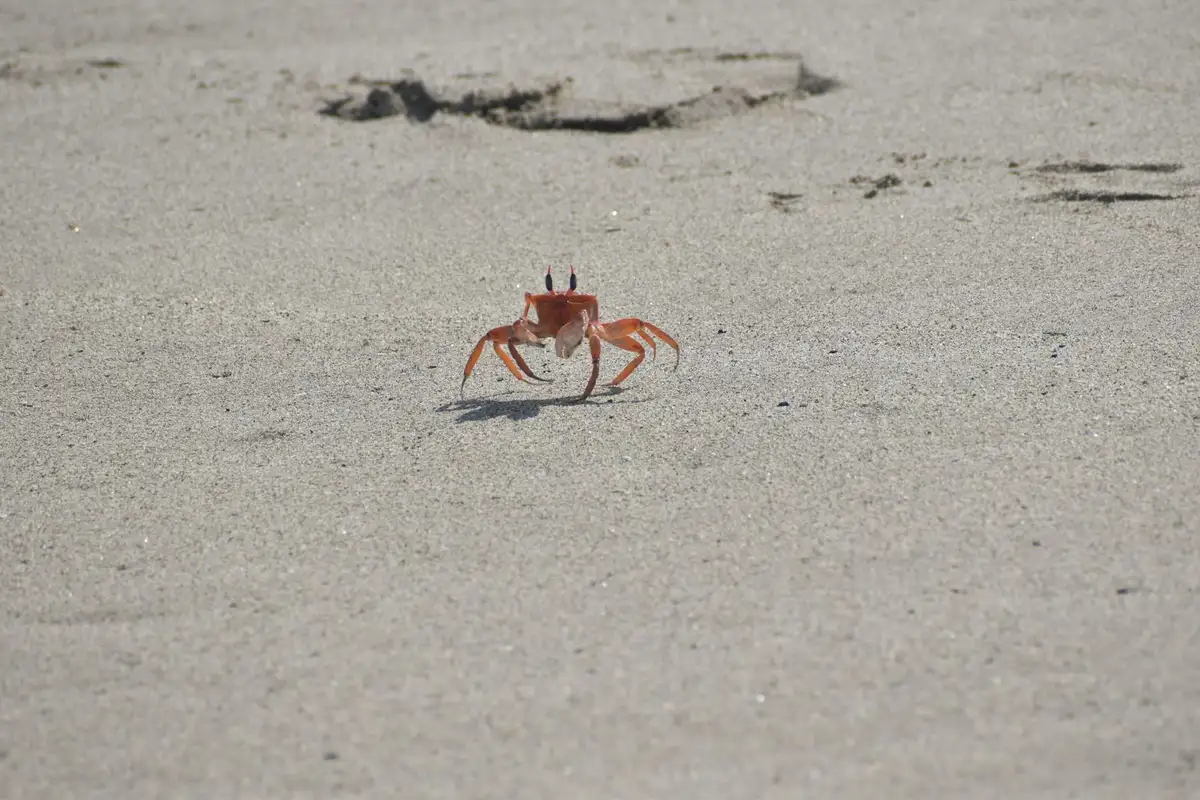
Just like us, hermit crabs can have terrible nights of sleep, and it shows in their behavior the next day. Spotting a sleep-deprived crab involves looking for unusual lethargy during their active hours, frequent waking and movement at odd times, or the strange habit of hiding in open, exposed areas of the tank. These are clear distress signals that their rest is being compromised. If you spot these signs, you can look into hermit crab sleep-disorder solutions, such as adjusting tank conditions and establishing a consistent day-night cycle. Providing a calm, dark sleeping area can also help them rest more peacefully.
From my time caring for my five crabs, I’ve traced these issues back to a few common culprits. A crab in an ill-fitting shell, like my Apollo was before I upgraded his options, will never feel secure enough to sleep soundly. Low humidity makes it physically difficult for them to breathe, constantly disturbing their slumber. Noisy environments, especially vibrations from nearby electronics or loud sounds, can startle them awake repeatedly. If you notice these signs, your hermit crab is stressed. What you should do is check shell fit, boost humidity, and give it a quiet, stable space, then watch for improvement.
The fixes are often straightforward once you identify the cause. For shell issues, provide a wide variety of natural, properly-sized shells. If humidity is low, adjust your substrate moisture by adding dechlorinated water and covering part of the tank lid. For noise, simply moving the tank to a quieter part of your home can work wonders. Adding more shelters and caves creates safe, dark spaces where they can retreat for uninterrupted sleep, a trick that completely changed Athena’s reclusive behavior.
Nighttime Care Routine for Better Sleep
Establishing a consistent evening routine signals to your crabs that it’s time to wind down and prepares their environment for a successful night. I follow these steps every single evening without fail. In the first 30 days of hermit crab care, a clear, step-by-step routine helps them acclimate. This nightly routine is a core part of that month-long care plan.
- Check and refresh all water sources-both fresh and saltwater-to ensure they have access to hydration throughout their active night.
- Reduce disturbances by turning off any tank lights and dimming the room lights about an hour before their “bedtime.”
- Ensure a quiet environment by muting the TV and avoiding loud activities near their tank.
Aligning their feeding schedule with their natural nocturnal instincts is a game-changer. I offer their main meal right as the lights go down, which encourages natural foraging behavior and aligns their digestive cycle with their active period. This small change stopped Zeus from being so restless and territorial around the food dish.
My personal habit involves mimicking a natural sunset for Poseidon, who is particularly sensitive to light changes. I use a dimmer switch on his heat lamp to gradually lower the light over 30 minutes. This gradual dimming helps him transition from his digging activities to a more settled, restful state, and I often find him tucked into a favorite corner by the time the light is fully off. It’s a small act of care that makes a huge difference in their well-being.
Molting and Sleep: What to Watch For
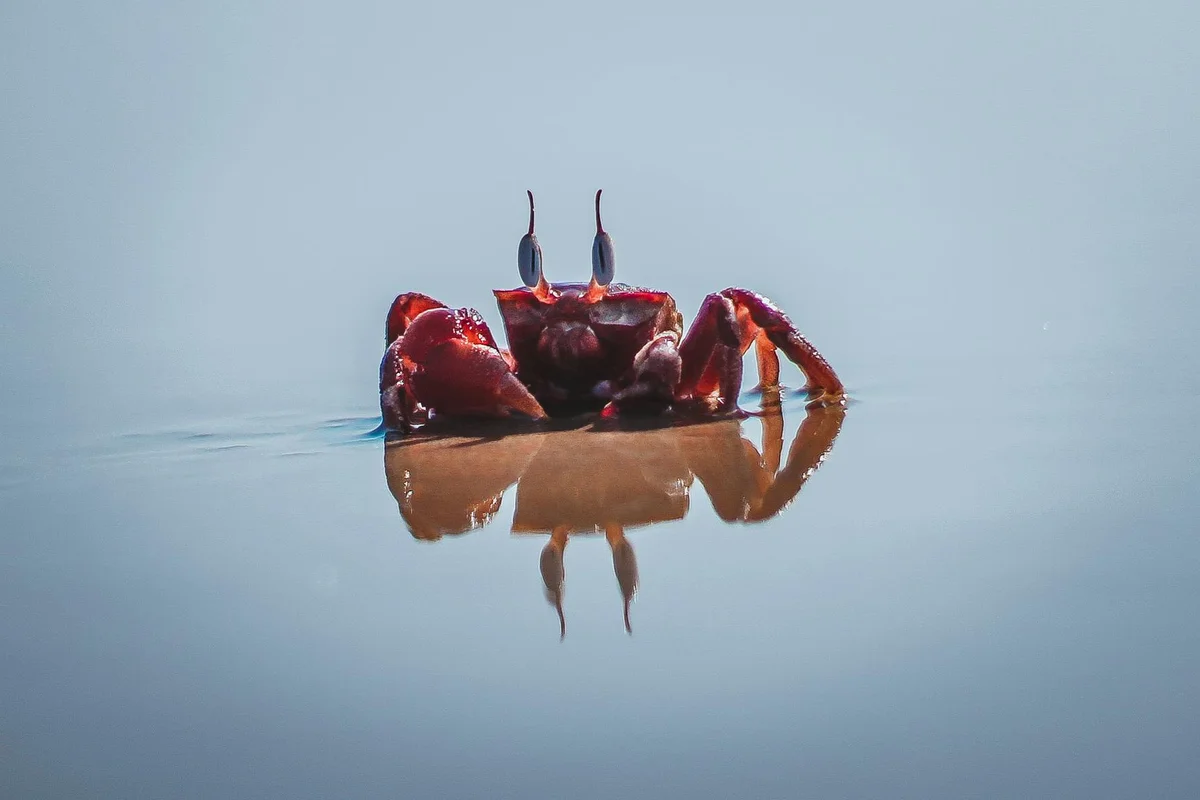
One of the biggest learning curves for me was telling the difference between a crab who is simply sleeping and one who is preparing for a molt. Confusing a molting crab for a sleepy one can lead to disastrous consequences if you accidentally disturb them. A sleeping crab is just taking a daily nap, while a molting crab is undergoing a critical, vulnerable life process.
Sleep is a regular, daily occurrence. My crab, Hermes, might tuck himself into a corner for a few hours, but he’s usually back out exploring by evening. Molting is a much more intense and prolonged event.
- A sleeping crab will often remain partially visible, might shift slightly, and will typically emerge within a day or two, especially at night.
- A molting crab will bury itself completely and deeply, sometimes for weeks or even months. They disappear from the surface world entirely.
Here are my top molting reminders to prevent panic and ensure your crab’s safety.
- Do Not Dig! If a crab is missing, assume it is molting. Digging for it can cause severe stress or physical injury.
- Watch for Prelude Behaviors. Before molting, my crabs often eat and drink excessively, storing energy. You might also see them “grain” the sand, moving it around with their claws.
- Isolate Aggressive Tank Mates. A crab like my assertive Zeus can be a threat to a soft, newly-molted crab. Be prepared to use an isolation tank if needed.
- Note the Duration. Sleep is brief; molting is a marathon. A surface molt (molting above ground) is a serious situation requiring immediate, careful action to protect the crab.
I learned this distinction clearly with my Strawberry Hermit Crab, Athena. Her usual calm sleep pattern involves her resting in a moist hideaway, often with her legs tucked in but her head and antennae occasionally twitching. When she began her last molt, her behavior was completely different. She dug a deep, extensive tunnel and was completely absent for nearly eight weeks. Her calm sleep was a daily event; her complete disappearance was a sign of the profound biological event of molting.
Common Questions
How can I tell if my hermit crab is getting enough sleep?
Observe their nighttime activity for consistent foraging and movement, which indicates proper rest. Lethargy or unusual hiding during active hours may signal sleep deprivation or environmental stress.
Do hermit crabs need complete darkness to sleep?
They thrive in total darkness for uninterrupted sleep, but a dim red or blue bulb can be used briefly for observation. Avoid bright or white lights at night to prevent disrupting their natural circadian rhythm.
Can hermit crabs sleep in groups or do they prefer solitude?
While they are social animals, hermit crabs often seek individual hiding spots for sleep to feel secure. Ensure your tank has multiple, separate shelters to accommodate their preferences and reduce competition. Understanding why they bury themselves—often to maintain moisture, regulate temperature, or hide during molting or threats—can help you provide the right burrowing options. Observing their burrowing and hiding behavior lets you tailor the substrate depth and shelter variety to support their natural instincts.
Restful Nights for Healthy Hermits
Providing a proper environment for your hermit crab to sleep is one of the most fundamental aspects of their care. The single best thing you can do is respect their nocturnal, burrowing nature by ensuring they have deep, sturdy substrate to feel secure. A dark, quiet tank with stable warmth and humidity mimics their natural cycles, allowing them the deep rest they need to thrive in your care. Creating a habitat that supports these needs is vital.
Further Reading & Sources
- Are Hermit Crabs Nocturnal Or Diurnal? Their Sleep Behavior Explained – A-Z Animals
- How many hours does a hermit crab sleep? – Quora
- HERMIT-CRABS.COM
The Crab Central is your ultimate resource for hermit crab enthusiasts, providing expert advice and practical tips to ensure the health and happiness of your shelled companions. With years of experience in crustacean care, we are dedicated to offering accurate, up-to-date information to support your hermit crab journey. Our mission is to foster a community of responsible hermit crab owners who are passionate about the well-being of these fascinating creatures.
Understanding Hermit Crab Behavior