
Glass Tank vs. Plastic Enclosure: Which Is Better for Hermit Crabs?
Choosing between a glass tank and a plastic enclosure is one of the first big decisions you’ll make for your hermit crab’s home.
After caring for my five hermit crabs for years, I’ve used both setups and can offer practical advice from direct experience.
Your crab’s health hinges on maintaining stable humidity and temperature, so your enclosure choice matters immensely.
We will compare insulation, cost, durability, and cleaning to help you select the ideal habitat.
Why the Right Enclosure is Vital for Hermit Crab Health
Your hermit crab’s enclosure is not just a box they live in. It is their entire world, and its conditions directly control their most fundamental biological processes. The habitat you provide can also directly influence their lifespan. Chronic stress from poor conditions can shorten life, while stable, appropriate environments support longer, more active lives.
I learned this lesson intimately with my calm Strawberry hermit crab, Athena. For weeks, she was unusually lethargic, barely moving from her corner. I realized my tank’s screen lid was letting all the humidity escape. The moment I sealed it and got the humidity consistently above 80%, she was a different crab. She started exploring, eating with gusto, and eventually dug down for a successful molt. That single variable—humidity—transformed her from a recluse into her curious, true self.
The right enclosure supports three non-negotiable health pillars for your hermit crabs:
- Humidity Control: Proper humidity keeps their modified gills moist so they can breathe. It is also absolutely critical for preventing a painful, failed molt.
- Stable Temperature: As tropical creatures, they need consistent warmth to digest food, stay active, and maintain a strong immune system.
- Safe Ventilation: You need fresh air exchange without creating a draft that strips away the precious heat and humidity they rely on.
Glass Tank Enclosures: The Transparent Home
Glass aquariums are the classic choice for a very good reason. They create a stable, visible, and secure microclimate that closely mimics a hermit crab’s natural needs. To create a hermit crab-friendly environment at home, tailor the setup with the right substrate, humidity, and safe hiding spots. This approach helps keep your crabs healthy and comfortable.
The Upsides of a Glass Home
- Superior Visibility: You get a perfect, unobstructed view of all their fascinating behaviors, from shell fights to intricate tunneling.
- Excellent Heat Retention: Glass holds heat from your lamps beautifully, creating a stable thermal gradient that lets your crabs self-regulate their body temperature.
- Claw-Proof Durability: Your crabs can climb and scrape all they want. A glass tank will not get scratched up or damaged by their constant activity.
The Downsides to Consider
- Substantial Weight: A large, substrate-filled glass tank is incredibly heavy and difficult to move for cleaning or rearranging.
- Condensation and Airflow Challenges: A fully sealed glass lid can lead to stagnant air and excessive condensation, while a screen lid loses all humidity. You must create a hybrid solution.
- Higher Initial Investment: A new glass tank, especially a large one, costs more upfront than a similarly sized plastic alternative.
From my own tank, I love watching my Caribbean crab, Hermes. He is a master climber, and the smooth glass walls provide him a perfect, safe surface to scale during his nightly adventures. I never have to worry about him damaging his tank, no matter how ambitious his climbs become.
Plastic Enclosures: The Lightweight Alternative

Plastic enclosures, often simple storage bins, are a popular and practical choice for many hermit crab owners starting out. Their primary advantage is often a much lower price point, making them an accessible entry into proper hermit crab care. You can find a suitable bin for a fraction of the cost of a glass tank. However, if you want to ensure your hermit crabs receive the best care, it’s essential to buy quality supplies and habitat.
Beyond affordability, their lightweight nature is a huge benefit. A full glass tank is heavy and difficult to move for cleaning or rearranging. A plastic bin, however, is easy to lift and carry, which simplifies maintenance significantly. Plastic is also fantastic at holding humidity, often better than a glass tank with a screen top. The tight-fitting lid creates a sealed environment that locks moisture in.
- Pros:
- More affordable and budget-friendly.
- Extremely lightweight and easy to handle.
- Excellent at retaining humidity.
- Cons:
- Scratches easily from crab claws and decorations.
- May warp or melt if a heat source is placed too close.
- Ventilation can be poor and may require you to drill your own air holes.
I used a large plastic bin as a temporary isolation tank for my crab Poseidon. It was remarkable how well it held the high humidity he needed for his constant digging in the moist sand substrate. I barely had to mist it compared to my main glass tank, proving its effectiveness for moisture-loving species.
Head-to-Head Comparison: Glass vs Plastic
Choosing between glass and plastic often comes down to your specific priorities and your crabs’ behaviors. Here’s a direct look at how they stack up in key areas.
| Feature | Glass Tank | Plastic Enclosure |
|---|---|---|
| Humidity Retention | Good (requires a modified lid) | Excellent |
| Ventilation | Naturally better with a screen top | Often poor; requires manual modification |
| Temperature Stability | Superior; holds heat safely | Can be unstable; risk of melting |
| Durability | Highly durable and scratch-resistant | Scratches easily and can become cloudy |
You will also notice a difference in how condensation behaves. In a glass tank, condensation forms on the cool glass walls, giving you a clear visual of the humidity level inside. In a plastic bin, condensation tends to form on the lid and upper walls, which can sometimes drip down and create overly wet spots in the substrate if ventilation is insufficient.
From my experience housing five active crabs, including my assertive Caribbean crab Zeus, glass is the undisputed winner for longevity. Zeus is constantly climbing and testing the strength of his surroundings, and the glass has withstood his assertive nature without a single scratch. A plastic enclosure would be covered in claw marks by now and would likely need replacing, making glass more cost-effective in the long run for energetic crabs.
Setting Up and Maintaining Your Enclosure
Getting the initial setup right is the most critical step for your crab’s health. I’ve found that a deep, properly packed substrate is the single most important factor, regardless of your enclosure type. The best substrate is one your hermit crab can prep themselves—deep, loose, and moisture-retentive enough for digging. They’ll naturally tamp and create burrows, so choose a mix that supports that prep work.
Initial Setup Steps
Follow these steps for a successful habitat creation.
- Create Your Base Layer: Start with a minimum of 6 inches of substrate. For my larger crabs like Zeus, I aim for 8+ inches to allow for proper molting. Use a mix of play sand and coconut fiber, dampened until it holds its shape when squeezed.
- Position Heavy Decor First: Place large items like climbing wood, ceramic food dishes, and the freshwater and saltwater pools directly on the glass or plastic bottom before the substrate goes in. This prevents crabs from tunneling underneath and causing a collapse.
- Add the Substrate: Carefully pack your substrate mix around the base decor. Create hills and valleys to encourage natural digging behavior, which my crab Poseidon absolutely loves.
- Install Climbing and Hiding Spots: Add your remaining decor, like cholla wood, reptile vines, and hiding caves. Ensure everything is stable. Hermes, my most adventurous crab, has taught me that unstable decor leads to falls and potential injury.
- Final Touches: Place your heat mat on the side of the enclosure (not the bottom), install your hygrometer and thermometer, and fit the lid securely.
Cleaning Routines Compared
Your cleaning schedule will vary slightly based on your material choice.
- Plastic Enclosures: These are champions for wipe-downs. For a deep clean, I can easily carry a plastic bin to the tub and scrub every corner with a vinegar-water solution. The non-porous surface doesn’t hold odors. The main drawback is that scratches from crab claws can cloud the view over time, making daily visual checks a bit harder.
- Glass Tanks: Glass offers a crystal-clear view for daily spot-cleaning. I can instantly see waste or spilled food that needs removal. Full cleaning is more labor-intensive because the tank is heavy and stationary. The superior clarity of glass allows you to monitor crab health and behavior with unparalleled ease, catching potential issues early.
Managing Humidity and Airflow
This is where my trial and error pays off for you. Glass tanks excel at holding stable humidity, which is vital for your crabs’ gills to breathe properly. The ideal temperature-humidity range for a hermit crab habitat is typically around 75–85°F (24–29°C) and 70–80% humidity. You can find more detailed information on this by visiting the ideal temperature-humidity range. My glass tank maintains 80% humidity with just occasional misting. Plastic bins can be more prone to condensation buildup on the sides and lid, which sometimes requires you to adjust ventilation holes.
For plastic, I use a soldering iron to melt small rows of holes near the top of the long sides. This allows for cross-ventilation without dropping the entire humidity level. In my glass tank, I simply crack the mesh lid open a tiny bit if I notice the air feels too stagnant. Monitoring with a reliable digital hygrometer is non-negotiable for both types.
Cost, Durability, and Long-Term Value
Let’s talk numbers and longevity. Your budget and long-term plans should guide this decision.
Initial and Ongoing Costs
The price difference can be significant, but it’s not the whole story.
- Plastic Enclosures: A standard plastic storage bin is incredibly affordable. You can get a suitable 20-gallon bin for a fraction of the cost of a glass tank. This low entry cost makes plastic an excellent choice for a temporary hospital tank or a beginner testing the hobby.
- Glass Tanks: A new glass aquarium is a more substantial investment. However, the secondhand market is your best friend. I found my 29-gallon tank on a local marketplace for a very low price. There are no recurring costs for the tank itself if you care for it.
Durability and Wear Over Time
Think about how the material will stand up to a life with crabs.
Plastic is lightweight and resistant to shattering, but it’s not invincible. Over the years, constant exposure to heat and humidity can make some plastics brittle. The scratches from climbing crabs will accumulate, slowly obscuring your view. Glass, while heavy and fragile from impact, is completely impervious to scratching from your pets. A glass tank will look as clear on day 1,000 as it did on day one, preserving that beautiful, unobstructed view of your pets.
My Personal Investment Choice
After starting with plastic bins, I made the switch to a large glass tank for my main colony. The initial cost was higher, but the long-term value has been undeniable. I don’t worry about it degrading, and the clarity makes daily care and enjoyment so much better. I view a quality glass tank as a one-time purchase for a permanent habitat, while I keep a plastic bin on hand as a reliable and cheap backup for quarantine or emergency situations.
Making the Best Choice for Your Crab Crew
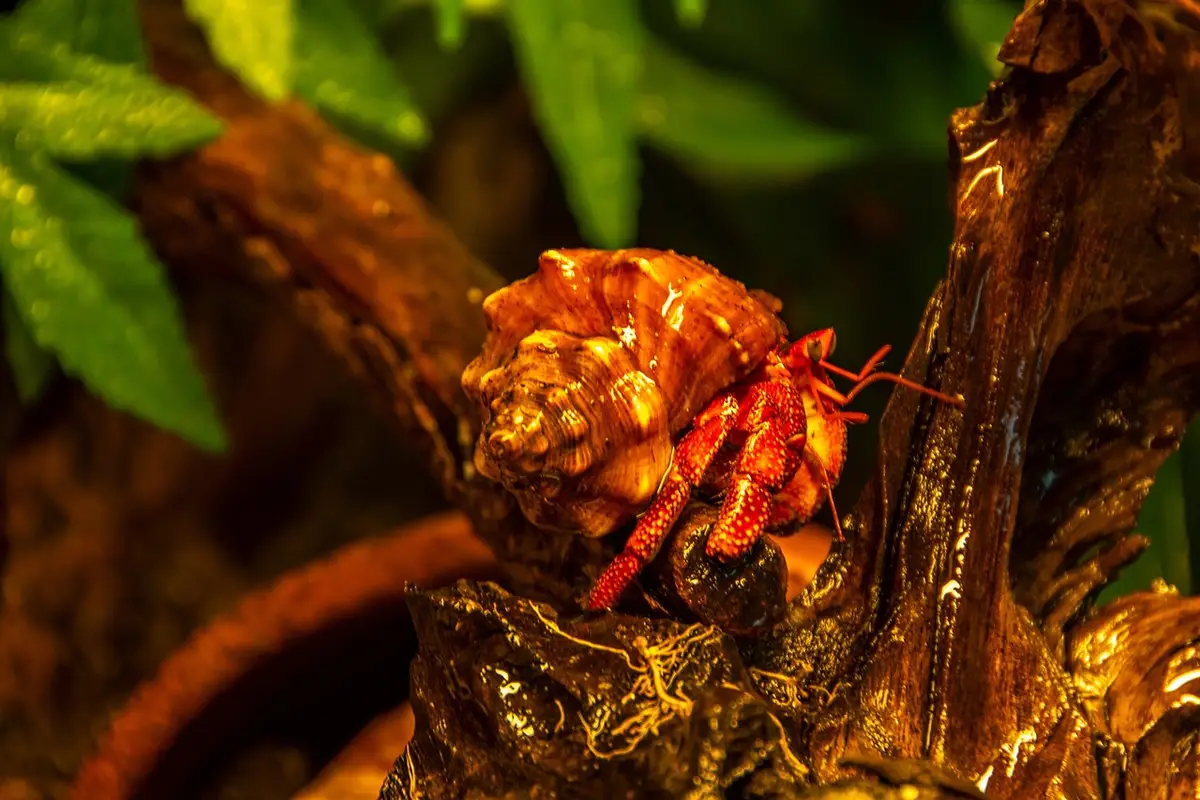
Choosing a home for your crabs is not a one-size-fits-all decision. You need to think about the specific personalities and needs of your crab crew. That means deciding between a land-based setup or a true marine habitat. The goal is to set up the perfect habitat tailored to land-dwelling or marine hermit crabs.
Matching the Enclosure to Your Crab’s Natural Behaviors
Different species have different instincts, and your enclosure should cater to them.
- For the Burrowers and Diggers: Species like Ecuadorians need deep, moist substrate to molt safely. A glass tank is often the only practical choice because it can hold the necessary 6+ inches of substrate without bowing or leaking.
- For the Avid Climbers: Caribbean crabs, like my Hermes and Zeus, are incredibly agile. They need a secure, tall lid and sturdy climbing structures. A glass tank with a locking mesh lid provides the height and security they crave for safe exploration.
- For Shy or Less Active Crabs: If you have a calm Strawberry crab like my Athena, a plastic tote can feel more secure and den-like. Just ensure it’s large enough to provide temperature and humidity gradients so she can find her comfort zone.
Considering Your Home Environment
Your own living space plays a huge role in this decision. Think about your room’s normal conditions.
- Room Temperature & Stability: Does the room you plan to use have drafts or big temperature swings? Glass is superior at maintaining a stable, warm environment, which is non-negotiable for hermit crab health. A plastic tote in a drafty room will struggle to hold heat.
- Space & Aesthetics: A plastic tote can be a space-saving solution, tucked under a table. But a glass tank is a display piece. I love watching my crabs’ nightly antics, and a crystal-clear tank makes that easy.
- Humidity is King: This is the most critical factor. Hermit crabs breathe through modified gills and require high humidity. Glass tanks with solid lids excel at trapping that moist, tropical air they need to survive.
My Personal Setup and Final Preference
After years of keeping a mixed group, my definitive choice is a large glass tank. My current crew-Hermes the explorer, Apollo the sunbather, Athena the observer, and the two assertive Caribbeans-all have conflicting needs.
The glass aquarium allows me to create a complex micro-habitat that keeps everyone healthy and stress-free. I can maintain the deep, moist substrate for molting, provide high climbing walls for the adventurers, and easily keep the humidity at a steady 80%. While a plastic tote has its place for temporary housing or isolation, for a permanent, thriving community, nothing has worked better for me than glass. The ability to see my entire ecosystem at a glance gives me peace of mind that everyone is safe and active.
FAQs
What are the signs of poor ventilation in a hermit crab habitat?
Stagnant air can lead to mold growth and a musty smell inside the enclosure. Your crabs may also become less active or show signs of respiratory distress if ventilation is insufficient. To prevent and manage mold in hermit crab enclosures, keep the habitat well-ventilated and dry. Regular spot-cleaning and substrate changes help prevent mold growth.
Is a plastic enclosure suitable for long-term use with multiple hermit crabs?
While plastic is affordable and holds humidity well, it may not withstand the wear from multiple active crabs over time. For a permanent setup with several crabs, a glass tank offers better durability and clarity. When decorating, choose safe, stimulating decor for your hermit crab tank. Look for inert, non-toxic pieces with secure edges and plenty of hiding and climbing options.
How can I safely heat a plastic enclosure without risking damage?
Always use a heat mat on the side of the enclosure rather than placing heat lamps directly above. Monitor the temperature closely to prevent the plastic from warping or melting due to excessive heat.
Making Your Final Choice
For a permanent, healthy home, a glass tank is the definitive winner, providing the stable heat and humidity your crabs need to thrive. A plastic tote serves as a fantastic temporary or quarantine setup, but it cannot match the consistent environment of a properly configured glass aquarium. Your ultimate goal is to replicate a sliver of the tropical shoreline, and a glass tank is the most reliable tool for that important job. To keep you on track, consult our essential supplies—the hermit crab tank setup checklist. It ensures you have substrate, hides, humidity gear, and calcium sources ready.
Further Reading & Sources
The Crab Central is your ultimate resource for hermit crab enthusiasts, providing expert advice and practical tips to ensure the health and happiness of your shelled companions. With years of experience in crustacean care, we are dedicated to offering accurate, up-to-date information to support your hermit crab journey. Our mission is to foster a community of responsible hermit crab owners who are passionate about the well-being of these fascinating creatures.
Proper Tank Setup