
Finding and Caring for Beach Hermit Crabs
Published on: December 18, 2025 | Last Updated: December 18, 2025
Written By: The Crab Guru
Have you ever spotted a tiny shell moving across the beach and wondered about the little life inside?
As someone who cares for five hermit crabs at home, I’ll share my hands-on experience to help you understand these fascinating creatures.
Remember: a hermit crab in your hand is a wild animal that deserves to stay in its natural home.
We’ll explore responsible observation, proper habitat setup, balanced nutrition, and recognizing healthy behaviors.
Locating Beach Hermit Crabs in the Wild
Ideal Habitats and Times for Spotting
Finding hermit crabs is a bit like a treasure hunt; you need to know where to look and when. The best time to go is during the early morning or late evening, especially on overcast days when the sun isn’t so intense. Hermit crabs are most active when the air is humid and the temperature is mild, avoiding the scorching midday heat.
Focus your search in the intertidal zone-the area between high and low tide. I’ve had the most luck in these specific spots:
- Along the high tide line, sifting through wrack lines of seaweed and debris.
- Around rocky outcrops and tide pools where they can find moisture and shelter.
- Near coastal vegetation and driftwood, which provide shade and hiding places.
My crab, Apollo, was found tucked under a piece of damp driftwood just after sunrise. Remember, they are nocturnal, so your chances of seeing them are always higher when the sun is low.
Safe and Non-Invasive Observation Techniques
Observing these creatures without causing them stress is a skill. The goal is to be a quiet visitor, not a disruptive force. Always move slowly and avoid casting a large shadow over them, as this can trigger a panic response.
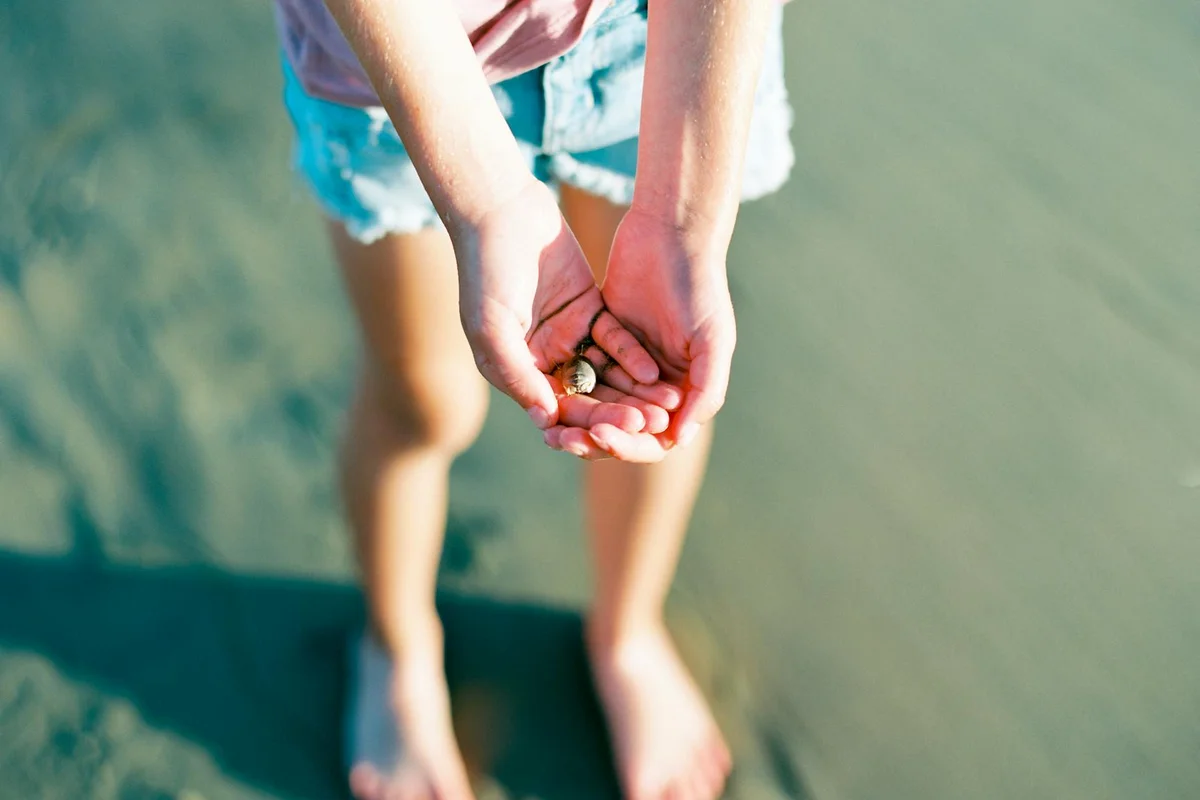
If you want to get a closer look, gently place an open palm in front of the crab and let it decide if it wants to walk onto you. Never pull a crab from its shell or pick it up from above like a predator would.
- Look with your eyes, not your hands. Disturb rocks and logs as little as possible.
- If you do handle one, keep it low to the ground to prevent a dangerous fall.
- Always return the crab to the exact spot you found it, facing the same direction.
I learned this the hard way with my first crab; a quick movement sent him deep into his shell for nearly an hour. Patience and respect are everything.
Ethical and Legal Considerations for Collection
Understanding Local Regulations and Permits
Before you even think about collecting a shell with a crab inside, you must do your homework. Many coastal areas have strict regulations that outright prohibit the collection of hermit crabs and other marine life. These rules exist to protect fragile ecosystems from being stripped bare.
I make it a habit to check with local fish and wildlife departments or park services every single time I visit a new beach. The laws can vary dramatically from one county to the next. Some places may require a fishing license or a specific collection permit, while others ban it completely. Ignorance of the law isn’t an excuse, and the penalty is never worth it.
Why Captive-Bred Crabs Are Often a Better Choice
After years of keeping hermit crabs, I am a strong advocate for adopting captive-bred individuals whenever possible. Choosing a captive-bred crab is a direct vote for animal welfare and sustainable pet ownership. Wild-caught crabs undergo immense stress during capture and transport, and many do not survive the journey to a pet store.
Captive-bred crabs, on the other hand, are already accustomed to life in an enclosure. They are less likely to be carrying parasites and are generally hardier. My crab Athena is captive-bred, and her calm, steady demeanor is a testament to a less traumatic start in life.
- They support ethical breeders instead of depleting wild populations.
- They are typically healthier and more resilient to captive conditions.
- You avoid the legal and moral ambiguity of taking an animal from its complex wild habitat.
Wild hermit crabs play a vital role in their beach environments as recyclers. Legging them in the wild ensures they can continue their important work in the ecosystem they call home.
Immediate Care After Collection

Safe Transport Methods
Getting your new crab home safely is your first responsibility. I never use sealed containers or plastic bags, as they trap carbon dioxide and suffocate the animal. A small, ventilated critter carrier with a secure lid is your absolute best bet for a safe journey. Place a handful of damp, clean sand or paper towels in the bottom to provide some grip and a bit of moisture.
Handle your new crab as little as possible. If you need to move them, let them walk onto your open hand rather than pulling them from their shell. The journey home should be as quick and stress-free as possible. Avoid loud music and extreme temperatures in the car. Your primary goal is a calm, dark, and stable environment to minimize their stress during the transition.
Initial Quarantine and Health Check
Every new crab must go into a separate, simple quarantine tank for at least 30 days before meeting your existing colony. This is non-negotiable in my routine. I learned this the hard way years ago when I introduced a crab that carried mites. A proper quarantine prevents the spread of pests and illness to your established pets.
During this period, perform a gentle health check. You are looking for:
- Active movement and responsiveness to gentle stimuli.
- All limbs are present and they move with purpose.
- Clear, bright eyes without any gunk or film.
- A clean, undamaged shell that they can fully retract into.
- No signs of mites-tiny red or black specks moving on the shell or body.
Offer shallow dishes of both fresh and salt water immediately. A newly collected crab is often dehydrated, so providing water is one of the most critical first steps you can take. Watch for them to drink or submerge themselves.
Creating a Proper Captive Habitat
Enclosure Setup: Size, Substrate, and Shelter
A standard 10-gallon tank is the absolute minimum starting point for two small crabs. My crabs, like the active Hermes, thrive with more space to roam and climb. Bigger is always better when it comes to hermit crab real estate; it reduces competition and stress.
The substrate is their foundation. It must be deep enough for your largest crab to bury itself completely for molting. I maintain a substrate depth of at least 6-8 inches in all my tanks.
- Use a mix of play sand and coconut fiber.
- The consistency should be “sandcastle-wet”-it holds its shape when you squeeze a handful.
- Provide multiple hiding places. I use half coconut hides, cholla wood, and aquarium-safe caves.
- Include plenty of safe climbing structures like reptile vines and sterilized driftwood.
Never, ever use painted shells or decorations. Your crab’s health depends on a natural, chemical-free environment that mimics their wild shoreline home.
Maintaining Humidity, Temperature, and Salinity
Hermit crabs have modified gills and breathe humid air. Low humidity feels like trying to breathe through a straw filled with sand. I keep my tank humidity between 70% and 80% using a sealed tank lid and a daily misting routine with dechlorinated water. A digital hygrometer is essential for accurate readings. Maintaining an ideal temperature-humidity range is crucial for a healthy hermit crab habitat. Consistently monitoring both temperature and humidity helps replicate their natural environment.
Temperature is equally vital. These are tropical animals. My crab Apollo loves to bask, and he can only do that if the ambient temperature is correct.
- Maintain an ambient temperature of 75-85°F (24-29°C).
- Use an under-tank heater on the side of the tank, not the bottom, to warm the air.
- Never place the tank in direct sunlight, as this can cause deadly temperature spikes.
For their saltwater pool, you cannot use table salt. You must use a marine salt mix designed for aquariums, mixed to a specific gravity of 1.021-1.024. I use a small refractometer to check this weekly. Always provide a separate pool of fresh, dechlorinated water alongside the saltwater pool.
Feeding and Hydration Needs
Balanced Diet for Beach Hermit Crabs
In my years of caring for my crew-Hermes, Apollo, Athena, Zeus, and Poseidon-I’ve learned that a varied, natural diet is the single most important factor for their health and vibrant shell colors. Think of their diet as a scavenger’s buffet, mirroring what they would find foraging on a beach at night. They are not picky eaters, but they do need a specific balance of nutrients to thrive.
I offer a mix of foods, rotating them to keep things interesting and ensure nutritional completeness.
- High-Quality Protein: This is crucial for growth and molting. My crabs go wild for dried shrimp, bloodworms, and plain, cooked seafood like shrimp, scallops, and fish. I occasionally offer a tiny bit of plain, cooked egg or chicken as a treat.
- Fresh Fruits and Vegetables: These provide essential vitamins and moisture. Favorites in my tank include bits of coconut, mango, banana, sweet potato, and leafy greens like kale. Remove any uneaten fresh food within 24 hours to prevent mold.
- Calcium for Strong Shells: A constant supply of calcium is non-negotiable. I always keep a cuttlebone in the tank, and I also crush up organic eggshells or offer a sprinkle of oyster shell grit. They will gnaw on this as needed.
- Healthy Fats and Seeds: I sometimes add a few unsalted sunflower seeds, flax seeds, or a bit of chia seed to their food dish for extra energy and healthy fats.
Providing Fresh and Salt Water
Hermit crabs have a unique physiology that requires access to both types of water. They carry water in their shells to keep their abdomen moist and to drink, but they also use it to regulate their salinity. Providing two separate, deep pools is not a luxury; it is a fundamental requirement for their survival. I use small, sturdy food containers sunk into the substrate to create easy-in, easy-out pools. Both freshwater and saltwater pools are essential.
For the saltwater pool, never use table salt. I use a commercial marine salt mix designed for aquariums, mixed to the specific gravity recommended on the package. For freshwater, I always use dechlorinated water—either bottled spring water or tap water treated with a reptile-safe dechlorinator. Make sure the water pools are deep enough for your largest crab to fully submerge its shell, but provide a safe way to climb out, like a small ramp of pebbles or a piece of plastic craft mesh. Hermit crabs are aquatic by nature and regularly soak to keep their gills moist. Providing the right depth and clean water supports this essential aquatic behavior. I change this water every other day to keep it pristine, as my crabs, especially Poseidon, love to soak and often track substrate into it.
Shell Swapping and Enrichment
Offering a Variety of Shells
Watching a hermit crab meticulously inspect and try on a new shell is one of the great joys of being an owner. A proper shell is their mobile home and their primary protection. A crab stuck in a poor-fitting or damaged shell is a stressed and vulnerable crab. I’ve seen my Apollo spend over an hour examining a single new turbo shell before deciding it was worthy. Watching this behavior is a window into shell-selection science. It highlights what makes a shell ‘perfect’ for a hermit crab—fit, balance, and protection.
You need to offer a generous selection of natural, empty shells. The key is variety in both size and opening shape.
- Turbo Shells: These are almost universally preferred by Caribbean and Ecuadorian species like mine. They are strong and have a round, D-shaped opening.
- Babylonia Shells: Another excellent choice with a smooth interior and a round opening.
- Avoid painted shells. The paint can chip and be ingested, potentially poisoning your crab. It can also seal the shell, preventing necessary humidity from reaching your crab’s abdomen.
- Offer shells slightly larger and slightly smaller than their current one. Crabs need options for a perfect fit as they grow.
Preventing Crowding and Boredom
Hermit crabs are active, curious creatures. In the wild, they would spend their nights traveling significant distances, foraging, and climbing. A bare, cramped tank leads to stress, aggression, and lethargy. An enriched environment directly translates to observable, natural behaviors and healthier crabs. I learned this quickly with Zeus, who became much less assertive once I gave him more space and things to do.
To prevent problems, focus on space and stimulation.
- Provide ample floor space. The general rule is at least 10 gallons per small crab, but more is always better. Crowding is a major source of shell-fighting stress.
- Create a vertical world. Hermit crabs love to climb. Use cholla wood, cork bark, reptile hammocks, and securely stacked rocks or backgrounds to give them height.
- Change the layout periodically. Every few months, I gently rearrange the tank’s decorations. When my crabs wake up that evening, it’s like they have a whole new world to explore, and their curiosity is a joy to watch.
- Offer safe, natural toys. Things like a shallow dish of leaf litter for them to rustle through, or a piece of grapevine wood to climb on, provide mental and physical stimulation.
Monitoring Health and Molting
Recognizing Signs of Stress or Illness
I learned the hard way that hermit crabs are masters at hiding weakness, a survival instinct from the wild. You must become a keen observer of their subtle behaviors. A healthy crab is an active crab, especially at night. If you notice one of your crabs is consistently lethargic, not moving for hours, or has dropped limbs, these are major red flags.
Look for these critical warning signs that something is wrong in your habitat:
- Lethargy and lack of movement during active hours
- A noticeable, unpleasant fishy odor coming from the crab or tank
- Visible mites on the crab’s body or in the shell opening
- The crab is out of its shell and cannot retract back into it
- A discolored or ashy exoskeleton
- Surface molting, where the crab tries to shed its exoskeleton on the surface instead of digging down
My crab Apollo once spent three days completely still in a corner, which was totally unlike his usual food-begging self. The problem turned out to be the humidity had dropped too low. A sudden change in behavior is almost always your first and most important clue that your crab is stressed or unwell.
Supporting Your Crab Through Molting
Molting is the most stressful and dangerous time in a hermit crab’s life. They shed their entire exoskeleton to grow, and the process leaves them incredibly soft and vulnerable. When my crab Athena prepares to molt, she digs a massive cave and disappears for weeks. It used to terrify me, but I’ve learned this is perfectly normal.
Your job is to create a safe environment for this natural process to unfold. Ensure your substrate is deep enough-at least 6 inches or three times the height of your largest crab-and sandcastle-wet so they can build stable molting caves. Do not ever dig for a buried crab; you risk injuring or killing it during this fragile stage.
Once they surface with a new, soft exoskeleton, they need two things: their old exoskeleton to eat for vital calcium and absolute privacy. Leave the old exoskeleton in the tank, as it is their perfect, nutrient-rich first meal after this exhausting ordeal. They will harden up over the next several weeks. Resist the urge to handle them during this time.
Long-Term Care and Conservation

Handling and Socialization Tips
Hermit crabs are not traditional “petting” animals. They are observational pets who bond with you through consistent, gentle care, not cuddling. Forcing interaction causes immense stress. I only handle my crabs when it’s absolutely necessary, like during a deep tank clean or to check for mites. To handle them properly, learn to read their stress signals—backing away, rapid scrambling, or pulling into their shell. Minimize handling unless essential.
The safest way to interact is to let the crab come to you. Sit by the open tank and place your flat hand, palm up, on the substrate. With patience, a curious crab like my Hermes might decide to explore. Always handle them close to a soft surface, just in case they fall. Never pull a crab from its shell or pick it up by its legs.
They do socialize with each other, often sleeping in piles or “shell shopping” from one another. Your role is not to be a playmate, but a quiet, reliable guardian who provides a safe and enriching world for them to live in.
Why Releasing Captive Crabs Is Harmful
This is a point of animal welfare I feel very strongly about. The idea of “setting them free” sounds kind, but it is a death sentence for a captive-raised hermit crab and ecologically irresponsible.
A crab raised in your care has lost its natural instincts for finding wild food and avoiding predators. It is accustomed to a steady food supply and consistent temperature. Releasing it into a harsh, competitive beach environment is like abandoning a house cat in the woods; it will not survive.
Furthermore, you risk introducing pathogens from your tank into the wild population. Adopting a hermit crab is a lifelong commitment to that individual animal. If you can no longer care for your crabs, the ethical choice is to rehome them to another dedicated keeper, never a beach. It’s part of understanding the ethics of hermit crab ownership.
FAQs
What is the average lifespan of a captive hermit crab?
With proper care, hermit crabs can live for 10 to 15 years or even longer in captivity. Providing a stable environment, balanced diet, and regular health checks are key to maximizing their lifespan. Understanding how to maximize your hermit crab’s longevity can help you plan for decades of companionship.
How do I handle a hermit crab that is experiencing a difficult molt?
If a crab is surface molting or struggling, isolate it in a quiet, humid container with its old exoskeleton nearby. Avoid disturbing it and ensure it has access to both fresh and salt water to support recovery.
Do hermit crabs form bonds with their caregivers?
Hermit crabs do not form emotional bonds like mammals, but they can become accustomed to their owner’s presence and handling. Consistent, gentle care can make them less skittish and more likely to explore when you are near. They are not strictly solitary and in the wild they live in colonies, with social interactions such as shell exchanges. In captivity, offering a suitable group can help meet their social needs, while bonding with humans remains limited.
Your Beach Crab Adventure Awaits
Your primary goal is to replicate the crab’s natural beach life as closely as possible within your tank. Provide a deep, moist substrate for digging and molting, offer a variety of clean, empty shells for growth, and maintain a balanced diet of marine-safe foods and calcium. Always prioritize their well-being by sourcing them ethically and observing their unique behaviors to ensure they are thriving in your care.
Further Reading & Sources
- Marine hermit crabs from beach! – HCA: Hermit Crab Association
- How to Keep Hermit Crabs Alive That Are from the Beach | Pets on Mom.com
- How to Care for a Hermit Crab Found on a Gulf Beach | Pets on Mom.com
The Crab Central is your ultimate resource for hermit crab enthusiasts, providing expert advice and practical tips to ensure the health and happiness of your shelled companions. With years of experience in crustacean care, we are dedicated to offering accurate, up-to-date information to support your hermit crab journey. Our mission is to foster a community of responsible hermit crab owners who are passionate about the well-being of these fascinating creatures.
Care Requirements by Species