Understanding Hermit Crab Intelligence and Brains
Published on: December 17, 2025 | Last Updated: December 17, 2025
Written By: The Crab Guru
Have you ever watched your hermit crab and wondered what’s really going on inside that tiny shell?
After caring for my five crabs for years, I’ve learned to see the clear signs of their active minds, and I want to help you do the same.
The next time your crab taps its claw, know it’s a form of communication worth noticing.
We will explore the structure of their brains, decode their surprising social behaviors, and reveal how to test their memory and problem-solving skills yourself.
The Hermit Crab Brain: Understanding Their Unique Neurobiology
Hermit crab brains are not like ours. They don’t have one central processing unit like a mammalian brain. Instead, they operate on a distributed network system. Think of their nervous system less like a single computer and more like a series of smart devices all connected on the same Wi-Fi network. This structure, built around clusters of nerve cells called ganglia, allows them to process information and react to their environment with surprising efficiency.
I see this in action with my crab, Hermes. His curiosity isn’t a deliberate, thought-out plan. It’s a rapid-fire series of reactions. His front ganglia process what his antennae touch, his optic ganglia process what his eyestalks see, and it all comes together to make him climb that new piece of cholla wood in seconds. My crab Apollo, on the other hand, has learned the precise spot under the heat lamp that feels best, a decision made by integrating temperature sensors throughout his body.
Ganglia and Brain Structure: A Simplified Look
Ganglia are the key to understanding your crab. Each ganglion is like a mini-brain responsible for a specific part of the body. They work together to run the whole crab.
- Supraesophageal Ganglion: This is the closest thing to a “head brain.” It sits above the esophagus and processes input from the eyes and antennae.
- Subesophageal Ganglion: Located below the esophagus, this cluster controls the mouthparts and is crucial for feeding.
- Thoracic Ganglia: These control the legs and walking. This is why a hermit crab can still move a leg even if it’s damaged.
- Abdominal Ganglia: These manage the delicate abdomen tucked inside the shell, including the muscles that hold the shell in place.
Sensory Integration: How Inputs Are Processed
Your crab is constantly receiving a flood of information. Their brain’s job is to make sense of it all to find food, avoid danger, and select a perfect shell.
Their long eyestalks provide a wide field of vision, detecting movement and shadows. The two pairs of antennae are even more critical. The long pair feels and tastes the air, while the short pair touches and explores surfaces directly. All this data streams into the ganglia to create a picture of their world.
You can observe this sensory processing yourself with a few simple steps.
- Gently place a new, crab-safe item (like a sea sponge) in a corner of the tank.
- Watch as a crab approaches. Notice how it stops and uses its long antennae to “taste” the air from a distance.
- As it gets closer, it will use its shorter antennae to tap the object repeatedly.
- Finally, it might use its claws to gently explore the texture. This step-by-step investigation is your crab’s brain methodically processing new sensory information.
Learning and Memory: Evidence of Hermit Crab Cognition
Scientific studies have shown that hermit crabs are capable of both learning and retaining memories. They can remember painful stimuli, solve simple mazes, and most famously, recall the qualities of shells. This isn’t just instinct; it’s learned experience shaping their future choices.
My crab Athena provides a perfect example. After a recent molt, she investigated three new shells I offered. She quickly dismissed two, but spent nearly ten minutes examining a particular turbo shell. A week later, when she was ready to change shells again, she went directly back to that same turbo shell, bypassing all others. She didn’t just remember a good shell; she remembered a specific shell she had previously evaluated and approved.
You can test your own crab’s memory with simple, safe experiments.
- The Food Location Test: Consistently place a high-value treat (like a bit of shrimp) in the same corner for a week. Then, watch how quickly they move to that spot when you next feed them.
- The Shell Maze: Create a simple, short barrier they must walk around to reach a preferred shell. Time how long it takes them on the first try versus subsequent tries.
- Habituation Check: Gently tap the glass in a specific pattern each day. Over time, you’ll notice they stop retreating into their shells in response, showing they’ve learned the sound is not a threat.
Types of Learning Observed in Hermit Crabs
Hermit crabs display several key types of learning that demonstrate their cognitive abilities.
- Habituation: This is learning to ignore a repeated, harmless stimulus. The glass tapping experiment is a perfect example. They learn that the vibration won’t hurt them.
- Associative Learning: This is linking two events together. My dominant crab, Zeus, has learned that when my shadow falls over the tank in the evening, food is coming soon. He now emerges and waits by the food dish.
- Spatial Navigation: Your crabs create a mental map of their tank. Poseidon, who loves to dig, always returns to the same moist corner of the substrate after his nightly wanderings. He knows his way home.
Memory in Action: Shell Selection and Recall
Shell selection is one of the most complex cognitive tasks a hermit crab performs. It involves memory of past shells, tactile assessment of new ones, and a decision-making process based on that information. Researchers study the science behind this behavior, examining sensory cues, neural processing, and ecological trade-offs that shape shell choices. Understanding these mechanisms helps explain why crabs pick shells that optimize protection, weight, and mobility.
When a crab finds a new shell, it doesn’t just jump in. It performs a detailed inspection, gauging the weight, the interior volume, and the size of the aperture. This experience is logged in its memory, creating a library of what a “good” shell feels like for its specific body. To understand why these factors matter, one can look into the science behind shell selection.
You can track and interpret this fascinating behavior.
- Provide a variety of clean, appropriate shells and note which ones your crabs investigate most.
- When a crab changes shells, record which one it chose and from where.
- Watch for repeat behavior. If a crab consistently chooses a certain type of shell (like a round opening over an oval one), it shows a remembered preference. This repeated choice is a clear window into your crab’s memory and learned preferences at work.
Problem-Solving and Behavioral Plasticity
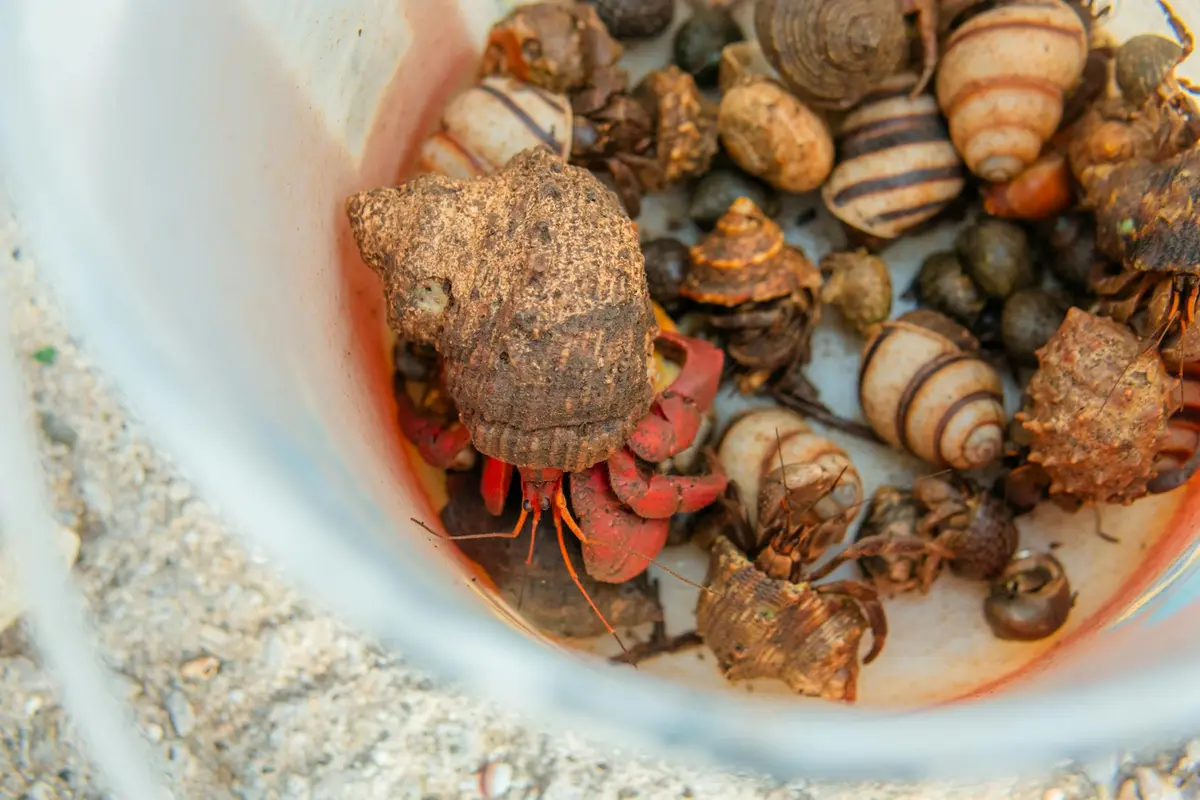
Watching my crabs tackle daily challenges has been one of the most rewarding parts of being an owner. Their ability to assess a situation and try different approaches is a clear sign of a working mind, not just instinct. I’ve seen them solve puzzles to get food, meticulously test new shells, and even coordinate escapes from a temporarily insecure tank lid.
Shell Manipulation as a Cognitive Task
Choosing a new home is a hermit crab’s most complex decision. It’s far more than just crawling into any empty shell. My crab Apollo will spend minutes tapping and exploring a shell’s interior with his claws, assessing its weight and fit. I’ve watched him roll a potential new shell to reposition the opening, a deliberate act of modification before he even attempts to try it on. This shows forethought and an understanding of physical space.
Signs of advanced shell-related problem-solving include:
- Rolling a shell to better access the opening.
- Using their claws to clear debris from inside a shell before inspection.
- Testing multiple shells in a single session before making a choice.
- Engaging in a “trial fit,” where they partially enter and exit a shell to gauge comfort.
Environmental Adaptation and Innovation
When I first upgraded my crabs to a larger tank, Hermes, my most curious crab, spent the first hour systematically climbing every new ornament and piece of cholla wood. Behavioral plasticity is their ability to learn the new “rules” of a changed environment and innovate new paths and hiding spots. This keeps their minds active and prevents boredom.
You can stimulate this adaptive thinking with a few simple steps:
- Rearrange their tank decorations and food bowls once a month.
- Introduce new, crab-safe items like a small terracotta pot or a new type of branch.
- Create simple food puzzles, like placing a piece of fruit inside a hollow cholla log.
- Vary the substrate depth in different areas to encourage natural digging behaviors.
| Common Problem | Observed Solution from My Crabs |
|---|---|
| Food dish is too high or difficult to climb into | Zeus will use a nearby rock as a step stool to access the dish. |
| Favorite shell is occupied by another crab | Apollo will persistently tap on the occupied shell, seemingly encouraging the other to vacate. |
| Water dish is empty | Poseidon will stand at the edge of the empty dish and click his claws against the glass, a behavior I’ve come to recognize as a specific request. |
| Needing to get from one side of the tank to another quickly | Hermes will climb across the overhead heater guard instead of walking the long way on the substrate. |
Sensory Perception: How Hermit Crabs Interpret Their World
Hermit crabs experience their world in a fundamentally different way than we do. Their long, mobile eyestalks provide a nearly 360-degree view, making them masters of detecting the slightest shadow or movement that could signal a threat. They don’t rely on vision alone; their antennae are constantly tasting the air and detecting vibrations, while their sensitive legs and claws read the texture and safety of every surface they touch. How well do hermit crabs actually see? Scientists are still unraveling the acuity of their vision and how their compound eyes interpret light to guide their behavior.
Based on Poseidon’s love for his water dishes, I’ve learned to enhance sensory enrichment by creating a “sensory corner.” I keep one saltwater and one freshwater pool there, alongside a small dish of damp sphagnum moss. The variety of textures and humidity levels in one area provides a rich sensory experience that he, and the others, frequently visit.
Environmental cues they reliably detect include:
- The vibration of your footsteps approaching the tank.
- The specific scent of their favorite foods (like mango or coconut).
- Changes in barometric pressure, often causing increased activity before a storm.
- The chemical cues (pheromones) left by other crabs, which communicate stress, mating readiness, or molting status.
Visual and Tactile Inputs
Those periscope-like eyestalks are crucial for navigation and judging distances when climbing. Athena, my most observant crab, will often freeze and retract slightly into her shell while her eyestalks swivel independently to assess a new object from multiple angles before she approaches. This shows a careful processing of visual information before taking action.
To engage these senses, try these toy ideas:
- Hanging bird toys with different colored, safe wooden blocks.
- A “texture mat” made from different safe materials like slate, cork, and untreated sea grass.
- Cholla wood of various sizes, which is perfect for both climbing and tactile exploration with their claws.
Integrating Senses for Survival
A hermit crab’s daily life is a constant exercise in sensory integration. The smell of food (chemical cue) draws them out, their eyestalks (visual) scan for safety, and their legs (tactile) navigate the terrain to reach it. This seamless blending of sensory data is what allows them to find food, avoid predators, and interact with their crab-mates effectively. Decoded, these behaviors tell you what your pet is trying to communicate about its needs and wellbeing. Reading these signals turns daily observations into practical care for your hermit crab.
Creating a multi-sensory habitat is simpler than you might think. Follow these steps:
- Provide a varied landscape with climbing opportunities (visual/spatial stimulation).
- Offer a rotation of different-smelling foods like cuttlebone, dried shrimp, and fresh fruits (chemical/olfactory stimulation).
- Include different substrates like a mix of sand and coconut fiber, and a moss pit (tactile stimulation).
- Ensure there are quiet, dark hiding places where they can retreat when sensory input becomes overwhelming.
Social Behavior and Intelligence in Colony Dynamics
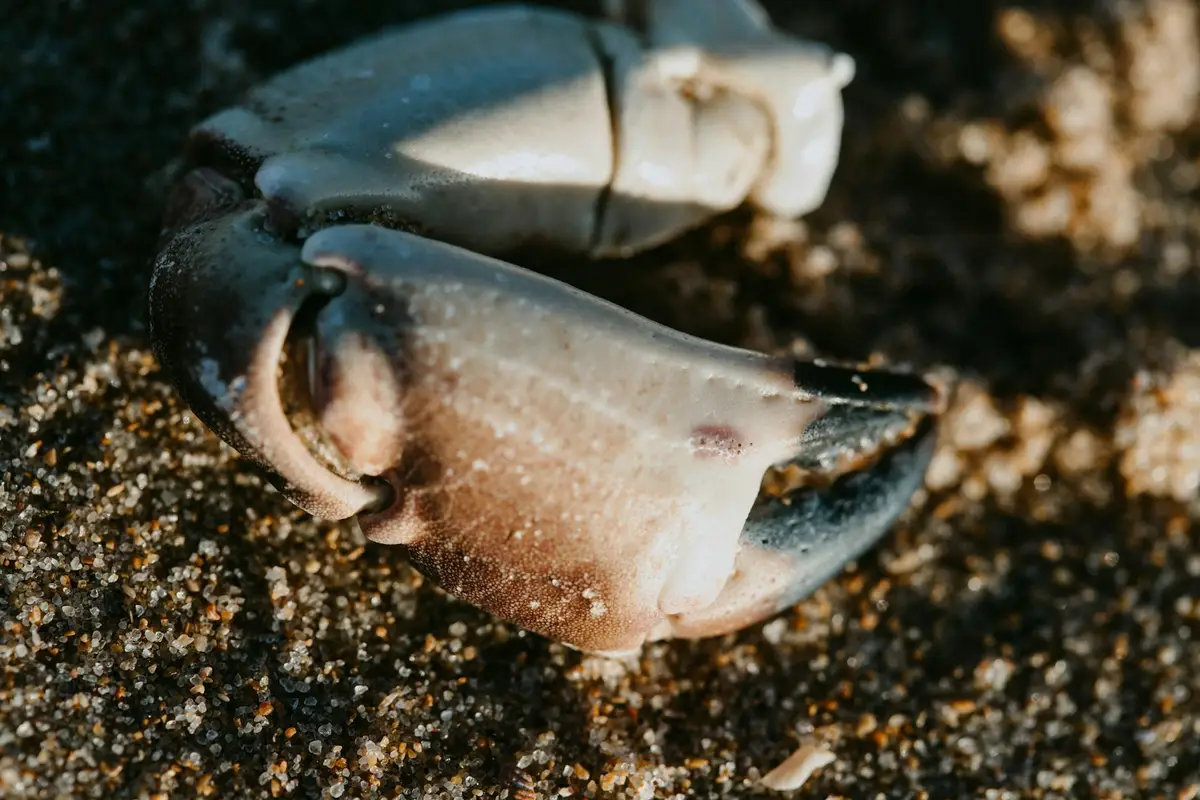
Living in a group is a complex mental workout for hermit crabs, not just a passive coexistence. Their social world is built on a delicate balance of communication, hierarchy, and learned group etiquette. I see this every day in my own tank, where subtle antennae touches and specific postures convey volumes of information. In a tank with several crabs, these dynamics unfold as they negotiate shells, space, and access to resources. Watching these interactions helps me understand how to support a harmonious multi-crab community.
Colony Interactions and Learning
Hermit crabs are keen observers of their tank mates. I’ve watched Apollo learn the best climbing routes by simply following Hermes’s lead. Resource sharing, especially shells, is a prime example of social learning and communication. They form orderly “chains,” where a crab will inspect a vacant shell, and if it’s unsuitable, it will wait, signaling to others that a switch might be happening soon. Do hermit crabs have social needs and form bonds, or are their interactions mainly driven by resource pressures? Understanding these dynamics can shed light on whether hermit crabs are social beings or tend toward solitary living.
- Movement Patterns: Crabs will follow successful foragers to food sources.
- Shell Exchange Chains: Multiple crabs line up, passing shells down the line in a coordinated fashion.
- Mimicking Behavior: Shyer crabs will watch bolder ones explore new decorations before trying themselves.
Molting and Social Cues
Molting is a vulnerable time that dramatically shifts colony dynamics. A crab digging down to molt sends a clear signal, and the others often give it a wide berth. You must be extra vigilant during these phases, as stress from a dominant crab can be disastrous for a molter. I always ensure there are multiple deep, moist substrate areas so a molting crab like Athena can find a quiet, secure spot away from Zeus’s usual patrol routes.
- Increased hiding and reduced activity from a crab can signal an impending molt.
- Other crabs may become more protective of food sources near a molting area.
- Monitor for any bullying or digging near an isolated crab, as this is a major stress indicator.
Applying Intelligence Insights to Hermit Crab Care
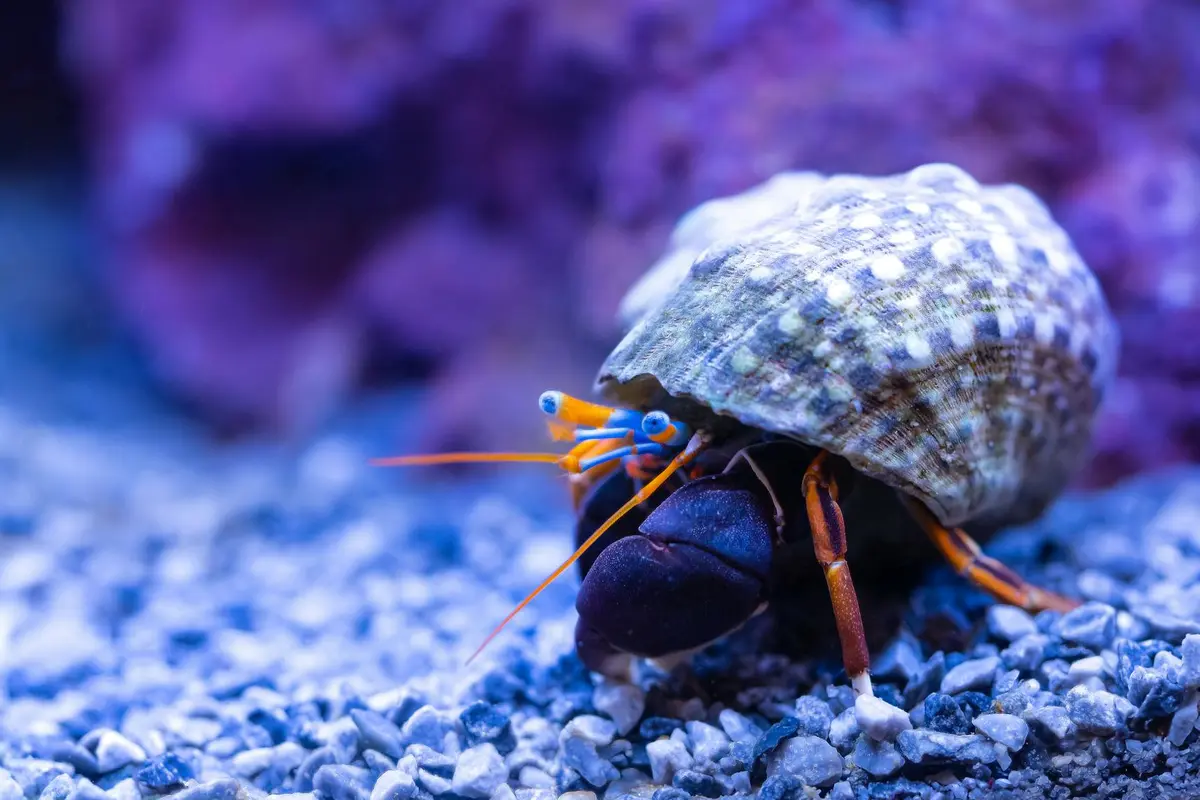
Recognizing their cognitive abilities means we have a responsibility to provide a stimulating life. A bored crab is an unhappy crab, and meeting their mental needs is a non-negotiable part of ethical pet ownership. Their environment should challenge them and allow for natural, intelligent behaviors to flourish. Ethics in hermit crab ownership also means supporting welfare and conservation through responsible sourcing and humane care. Respecting their wild origins helps conserve the species.
- Rotate novel items like sea sponges, cholla wood, and cork bark.
- Create food puzzles by hiding treats inside untreated wiffle balls.
- Rearrange tank layouts monthly to simulate a changing environment.
- Provide a wide variety of shells to encourage natural selection behavior.
Enrichment Activities for Cognitive Stimulation
Problem-solving is a fantastic way to engage your crabs’ brains. I’ve had great success with simple, safe games. One of my crabs’ favorite activities is a “treasure hunt” where I bury pieces of cuttlebone just under the substrate surface. It encourages natural digging and foraging instincts.
- Find a clean, small terracotta pot or a section of PVC pipe.
- Place a high-value treat like a bit of dried shrimp inside.
- Block the entrance with a piece of moss or a light cork bark piece.
- Watch as they figure out how to move the obstacle to get the reward.
Habitat Design to Support Natural Behaviors
Think of your tank as a landscape for exploration. Creating different levels, textures, and hiding spots directly supports their spatial navigation skills and reduces stress by providing choice. Poseidon spends hours rearranging the sand in his favorite corner, a completely normal and enriching behavior I support by providing deep substrate.
- Use climbing branches and reptile hammocks to create a multi-level environment.
- Mix substrates like sand and coconut fiber to offer varied digging experiences.
- Create visual barriers with plants and decorations to make the space feel larger and safer.
- Ensure multiple food and water stations to prevent resource guarding by dominant individuals.
FAQs
Do hermit crabs have individual personalities?
Yes, hermit crabs display unique traits such as preferred climbing routes or shell choices, showing distinct personalities. Do hermit crabs have personalities? Understanding individual behavior traits and temperaments helps explain why each crab acts differently. Observing these behaviors can help you tailor care to each crab’s needs.
How do hermit crabs communicate with each other?
They use antennae touches, body postures, and chemical signals to share information about food, shells, and social hierarchy. This communication helps maintain order and coordination in their colony.
What are signs of a mentally stimulated hermit crab?
A stimulated crab will actively explore new objects, engage in problem-solving like food puzzles, and show reduced stress behaviors. Providing regular enrichment supports their cognitive health and natural instincts.
A Final Thought on Their Remarkable Minds
Recognizing that your hermit crab has a complex, thinking brain fundamentally changes how you care for them. They are not simple decorations but curious, problem-solving individuals who deserve an enriching habitat that challenges their instincts and nurtures their well-being. The truth about hermit crab intelligence learning is that they can learn from experience and adapt to new tasks. Providing puzzle-like enrichment helps them thrive and keeps their minds active.
Further Reading & Sources
- The Unexpected Intelligence of Hermit Crabs – Sarah McCarthy’s Blog
- Hermit crabs’ intelligence? – HCA: Hermit Crab Association
- r/hermitcrabs on Reddit: Are hermitcrabs intelligent and have feelings to owner?
The Crab Central is your ultimate resource for hermit crab enthusiasts, providing expert advice and practical tips to ensure the health and happiness of your shelled companions. With years of experience in crustacean care, we are dedicated to offering accurate, up-to-date information to support your hermit crab journey. Our mission is to foster a community of responsible hermit crab owners who are passionate about the well-being of these fascinating creatures.
Understanding Hermit Crab Behavior