
The Science Behind Hermit Crab Shell Selection
Published on: January 4, 2026 | Last Updated: January 4, 2026
Written By: The Crab Guru
Have you ever wondered how a hermit crab chooses its perfect mobile home from the countless shells scattered across the beach?
After caring for my five hermit crabs for years, I’ve observed their intricate selection process firsthand and researched the fascinating biology behind it.
A shell that seems perfect to our eyes might feel completely wrong to a hermit crab.
We’ll explore how crabs assess shell fit through specialized body parts, detect vacant shells using chemical signals, and even negotiate shell swaps with other crabs.
The Fundamental Need for Shells in Hermit Crab Life
We often call a shell a “home,” but for a hermit crab, this is a profound understatement. Evolutionarily, they traded the ability to grow their own armor for the incredible versatility of using found objects. A shell is not just a house; it is a mobile survival pod, and choosing the right one is a matter of life and death. It is the single most critical piece of equipment they will ever own.
The primary functions of a shell extend far beyond simple cover.
- Protection from Predation: Their soft, coiled abdomen is a prime target for birds, fish, and other crabs. A well-fitting shell is their only shield, allowing them to retract completely and block the entrance with their larger claw.
- Shelter During Molting: When a crab molts, it sheds its exoskeleton and is a blob of vulnerable, new skin. They often seal themselves inside their shell during this process. The right shell provides a safe, dark chamber where they can undergo this dangerous transformation undisturbed.
- Regulation of Moisture: Hermit crabs breathe through modified gills that must be kept moist. The micro-environment inside the shell helps trap humidity directly against their abdomen, preventing fatal desiccation.
I learned the true meaning of shell dependency during a particularly stressful evening with Apollo. He had abandoned his shell, something they rarely do outside of a swap. Seeing his pale, wrinkled abdomen exposed and twitching was a heart-stopping moment. He was utterly defenseless, scrambling in a panic, and I understood in a visceral way that he was not just homeless; he was in imminent danger. We immediately provided a dark, humid hideout with multiple ideal shell options, and the relief was palpable when he finally re-housed himself hours later.
Key Scientific Factors Influencing Shell Selection
Shell Size and Body Size Compatibility
A crab is not just looking for a shell that fits; it is looking for one that fits *just right*. The aperture (the shell’s opening) must be large enough for the crab to fully retract inside, but not so large that it cannot effectively block it with its claw. The internal volume must also accommodate its entire body, including its water-storing abdomen, without being so spacious that the crab rattles around. A shell that is too tight can restrict growth and cause deformities.
Here is how you can assess the correct fit for your pet crab.
- Observe your crab while it is out of its shell. Note the size and shape of its big claw and its abdomen.
- Offer a selection of shells with apertures slightly larger than its big claw.
- Watch a shell inspection. A crab should be able to quickly insert its claws and abdomen into the new shell for a test fit.
- The perfect fit allows the crab to retreat entirely, with its legs and antennae tucked in, and the claw forming a snug door.
Shell Morphology and Physical Characteristics
The physical design of a shell dramatically impacts a crab’s daily life. A shell’s weight, the shape of its whorls (the internal coils), and its overall thickness determine how much energy the crab expends to carry it. A heavier, thicker shell offers superior protection but at a high metabolic cost, potentially slowing the crab down and requiring more food. A lighter shell is easier to carry but may chip or break more easily.
Different crab species have evolved preferences based on their native habitats.
- Caribbean hermit crabs (like Hermes and Zeus) often prefer the lighter, longer spirals of Turbo or Tapestry shells, which aid in their fast, climbing lifestyle.
- Ecuadorian hermit crabs (like Apollo) frequently choose sturdier, rounder Apple Snail shells, which provide great protection for their more terrestrial habits.
- The unique shape and wide aperture of a Murex shell might be perfect for a larger, more assertive crab like Zeus, while a delicate Strawberry crab like Athena might favor a lighter Babylonia shell.
Environmental and Sensory Cues
Hermit crabs do not choose shells with their eyes alone; they use a sophisticated suite of chemical sensors. They can detect minute chemical cues left in a shell by its previous occupant. A shell that once housed a dead or dying crab might be rejected due to perceived danger, while one that housed a healthy, successful crab might be highly attractive. They can also sense the potential parasite load, avoiding shells that might contain harmful organisms. This raises a related question: do the most colorful hermit crab species show stronger shell color preferences, or are their choices driven by other factors? In practice, shell choice is driven more by size, fit, and safety cues than by color.
Shell color plays a more significant role than you might think. In the wild, a lighter-colored shell can reflect heat, aiding in thermoregulation for crabs in sunny, sandy areas. Darker shells can help with camouflage in rocky or algae-covered environments and may absorb beneficial warmth in cooler climates. My crab Poseidon, who loves to dig in the moist, dark substrate, has always shown a distinct preference for darker, mottled shells, almost as if he’s matching his surroundings. Color changes can also be a quick health indicator, signaling stress, dehydration, or molting issues that may need attention. In a basic health indicator guide, [color changes indicate health](https://thecrabcentral.com/what-do-hermit-crab-color-changes-mean-health-indicator-guide), alongside activity and shell condition, to help you tell when your crab is thriving or needs care.
Behavioral Mechanisms in Shell Assessment and Choice
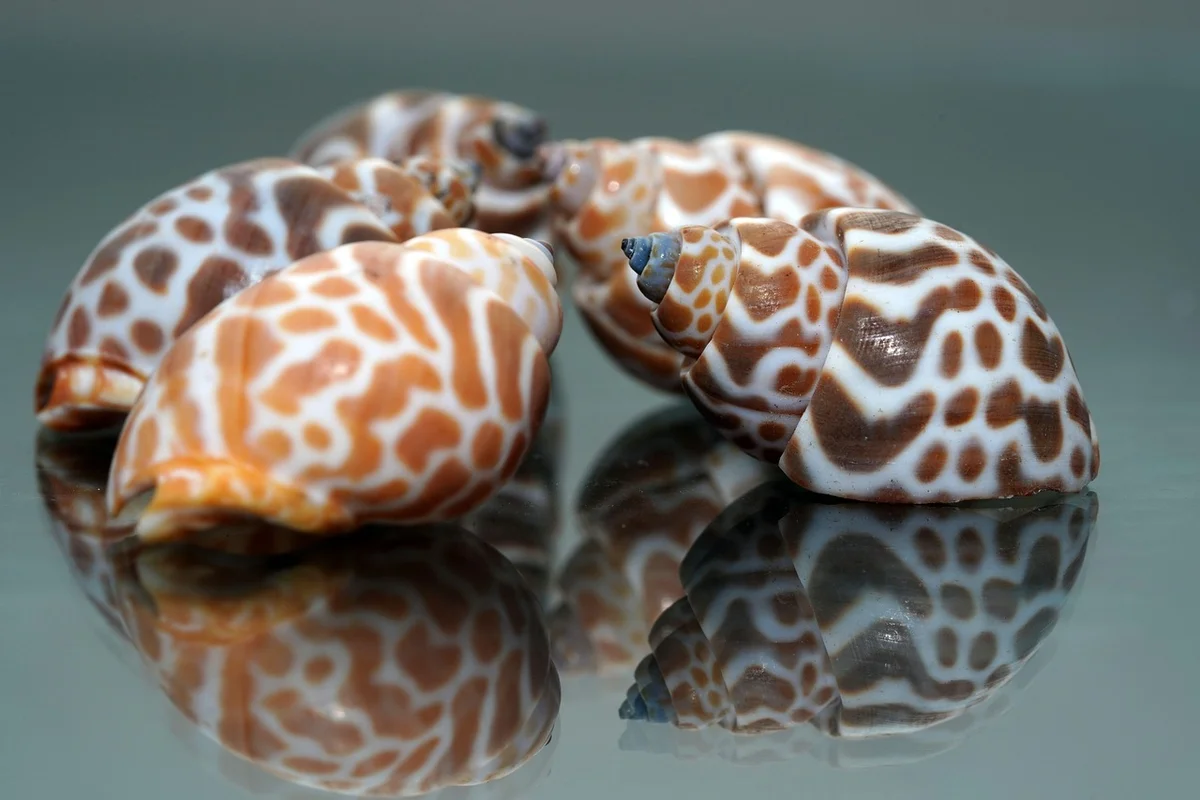
Watching a hermit crab choose a new home is like watching a meticulous shopper try on clothes. They don’t just pick the first shell they see; they perform a detailed, multi-sensory inspection to find the perfect fit. The process is both scientific and fascinating to observe. Understanding their behavior can help you interpret the signals they give during this selection.
It begins with a careful tactile inspection. A crab will use its claws and walking legs to feel the shell’s exterior, checking for cracks, holes, and overall texture. Then, the antennae come into play, tapping and probing the shell’s opening. This is their way of measuring the internal dimensions without committing to a move.
The real test comes next. The crab will partially enter the shell, assessing the interior space with its abdomen. It needs enough room to retract fully but not so much that it wobbles around. I’ve seen my crab, Hermes, do this repeatedly. His curious nature means he’ll sample almost every new shell I introduce. He’ll try one, wander around for a bit, then often return it to the “shell shop” and test another.
This behavior is known as shell turnover. In my tank, it’s common to see a single desirable shell get tried on by three or four different crabs in one day. They are constantly re-evaluating their options, and a crab might change shells several times before it seems truly satisfied with its choice. Often, this is part of the complete shell-switching process. Crabs scout multiple shells, test the fit, and only settle when they’re truly satisfied.
Competition and Social Dynamics in Shell Acquisition
In the wild and in our tanks, the best shells are a limited resource. This scarcity creates a complex social structure, especially when managing multiple crabs in one tank, where competition can get intense. Crabs don’t just find shells; they negotiate, fight, and sometimes steal them from one another.
When a crab finds a potential new home, other crabs will often gather around, waiting for their turn to inspect the vacated property. This can lead to a phenomenon called a “shell rush.” I’ve witnessed this lead to brief, claw-snapping fights, especially when my assertive crab, Zeus, is involved. He has a habit of guarding high-quality shells, not necessarily to use them himself, but to control the resource. He’ll sit near a prime shell, deterring others from approaching until he decides to move on.
Crabs also use a form of signaling called “shell rapping,” where one crab will tap and knock on the shell of another to initiate a potential swap. It’s a direct communication method that says, “I’m interested in your shell.”
To maintain a peaceful tank, you need to watch for signs of shell-related aggression. Look for these behaviors:
- Crowding around a single crab that is changing shells.
- One crab consistently chasing others away from the shell pile.
- Audible tapping or knocking sounds coming from the tank.
- A crab being forcibly pulled from its shell by another.
Providing a wide variety of shell types and sizes is the single best way to reduce this competition and keep your crab community harmonious.
Practical Application: Selecting and Providing Shells in Captivity
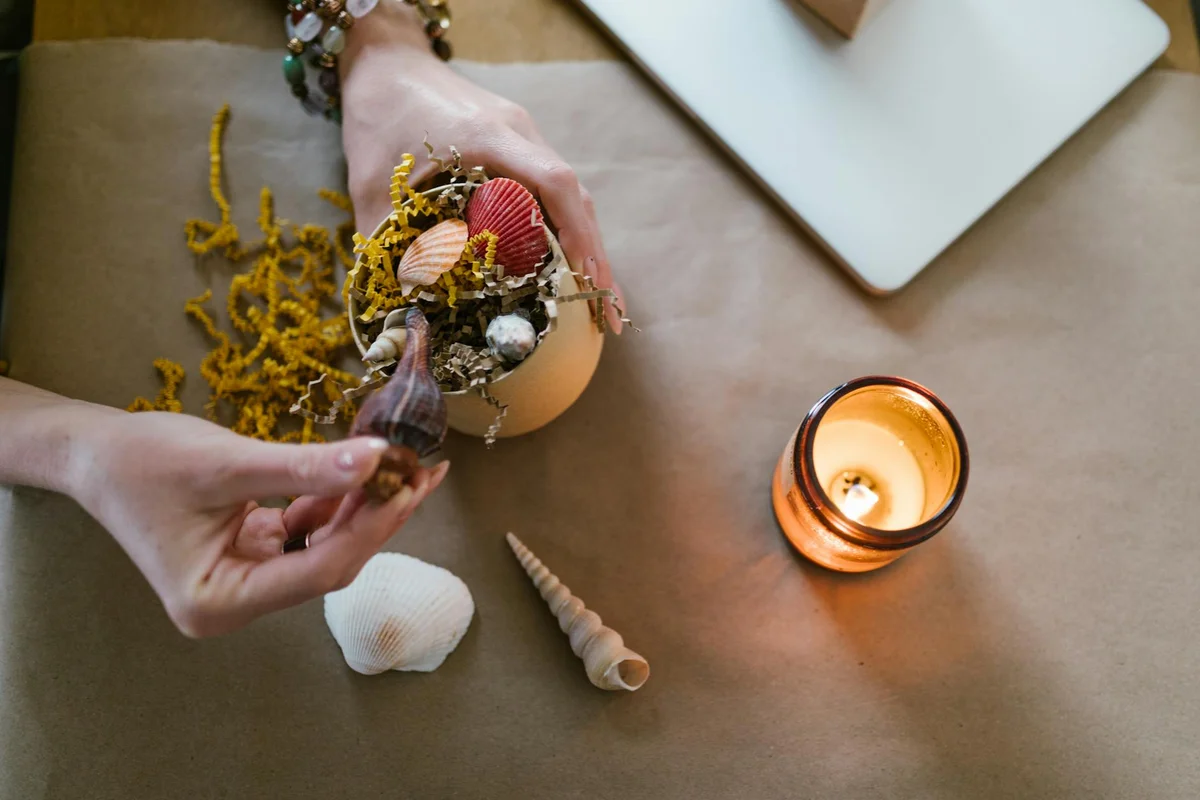
How to Offer a Variety of Suitable Shells
Creating a ‘shell shop’ is one of the most rewarding parts of hermit crab care. I set mine up in a shallow, clean food dish placed away from the main food and water bowls to keep it dedicated and tidy. This designated area prevents shells from being buried under substrate and makes it easy for your crabs to browse their options. This is all part of creating a hermit crab-friendly environment at home. When shells are easy to browse and access, it reduces stress and supports healthier molts and growth.
Follow these steps to build an excellent shell shop:
- Gather a large assortment of shells-aim for at least 3-5 shells per crab.
- Include a range of sizes slightly larger than your crabs’ current shells to accommodate growth.
- Offer different shapes and types, such as turbo, murex, and babylonia shells, as species have different preferences.
- Ensure every single shell is natural, clean, and completely untreated. Boil them in dechlorinated water to sterilize.
I learned the hard way that painted shells are a massive risk. Always source natural, untreated shells to prevent your crab from being exposed to toxic paints or sealants they might chew on. This brings up the question: are painted shells safe for hermit crabs? Understanding the risks helps me explore safer alternatives. My crew, especially the curious ones like Hermes, will investigate and try on every new shell I provide.
Timing Shell Replacements with Molting and Growth
Timing is everything when introducing new shells. The best moment is right after a crab has finished molting and its new exoskeleton has hardened. This is when they are most actively seeking a new, roomier home for their larger body. You’ll see them meticulously inspecting the shell shop.
I also keep a few shells available at all times. Crabs like my Apollo sometimes decide to change shells on a whim, not just after a molt. Watch for signs of a crab outgrowing its shell, like too much of its big claw sticking out of the shell opening or a general difficulty retracting inside.
| Shell Type | Best For Species | Pros | Cons |
|---|---|---|---|
| Turbo Shells | Caribbean, Ecuadorian | Lightweight, round opening is a favorite | Can be fragile if too thin |
| Murex Shells | Larger Caribbean Crabs | Very durable, often has a wide aperture | Heavier, may be cumbersome for smaller crabs |
| Babylonia Shells | Strawberry, Ecuadorian | Lightweight with a flared, elegant opening | Opening can sometimes be too irregular |
| Whelk Shells | Most Species | Common, affordable, good general shape | Inner spiral can be too narrow for some crabs |
Common Mistakes to Avoid in Hermit Crab Shell Care
Many well-intentioned owners accidentally make choices that stress their pets. A poor shell choice directly impacts a hermit crab’s sense of security and can lead to prolonged vulnerability. In the wild, a bad shell means a higher risk of predation and dehydration. Understanding shell selection and evacuation behavior helps explain why hermit crabs change shells: they seek a better fit to stay secure and maintain moisture. They assess shell size, weight, and opening, and will evacuate a shell when it no longer protects them.
Avoid these harmful practices to keep your crabs safe and content:
- Using painted or varnished shells. The paint can chip and be ingested, leading to poisoning.
- Offering shells that are far too heavy, which can exhaust and trap a crab.
- Providing shells that are too light and thin, offering little protection.
- Ignoring significant shell wear, cracks, or holes that compromise the structure.
- Only offering one type of shell, ignoring species-specific shape preferences.
I made a critical error early on with Apollo. I gave him a beautiful, glossy turbo shell from a craft store. He moved into it immediately, but within days became lethargic and stopped eating. I later realized the shell was coated with a clear sealant. The moment I replaced it with a natural, boiled turbo shell, he perked up and was back to his basking, shell-collecting self within hours. It was a stark lesson in prioritizing their health over our aesthetic preferences.
Where to Find and Source Optimal Shells for Your Pets
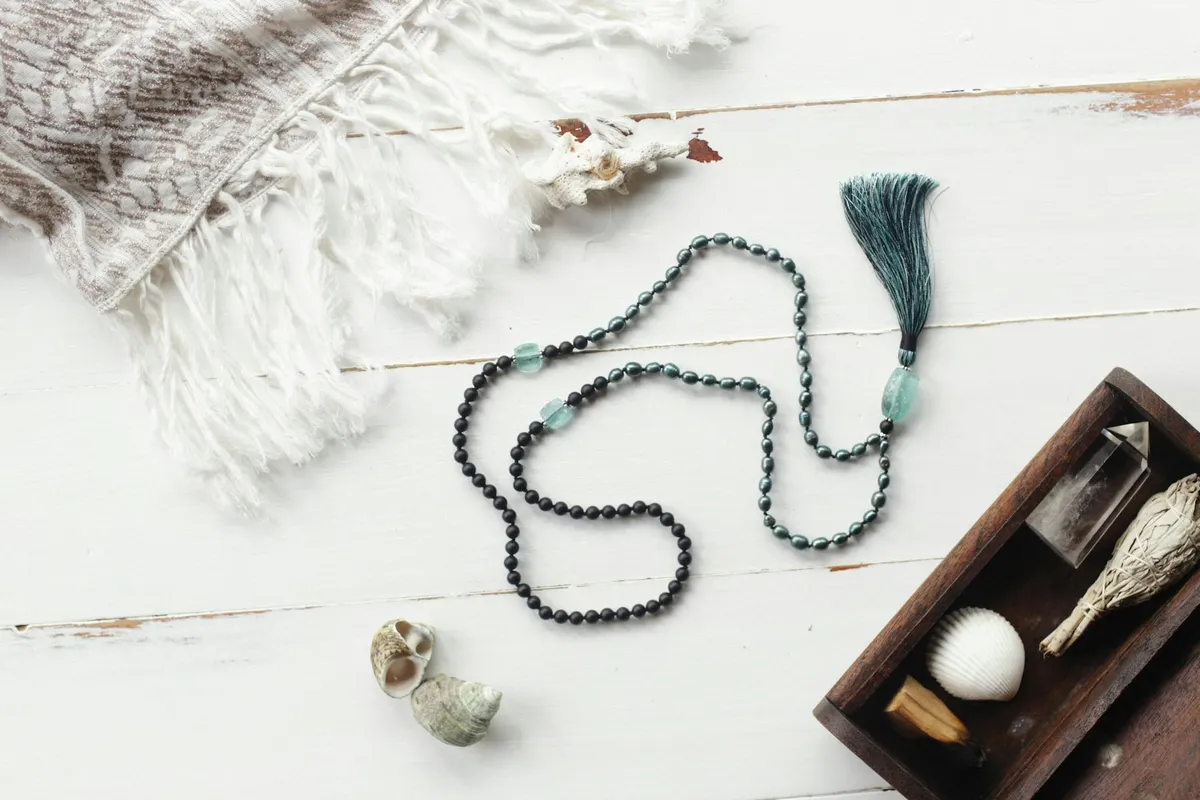
Finding the perfect new home for your crab is a rewarding part of being an owner. I’ve spent years sourcing shells for my crew, from the fast-moving Hermes to my calm observer, Athena. The best shells come from environments that mimic your crab’s natural microhabitat, which directly influences their shape and weight. Here’s a complete look at hermit crab shell types, including natural options and synthetic alternatives. We’ll cover how to choose by size, weight, and habitat.
Your Shell Sourcing Options
You have two primary paths for finding shells: purchasing them or collecting them yourself. Each has its own set of considerations for the health of your pet.
- Purchasing from Reputable Sellers: This is often the safest and most convenient route. Look for sellers on Etsy, eBay, or specialty pet stores that specifically market shells for hermit crabs. Always verify that the shells are natural, unpainted, and have not been treated with any varnishes or chemicals. I’ve had great success finding turbo shells this way, which are a favorite for my Caribbean crabs like Zeus and Poseidon.
- Ethical Beach Combing: If you live near a coast, collecting your own shells can be a wonderful experience. Focus on beaches known for gastropod populations. Only collect empty shells that are pristine inside and out, avoiding any with holes or heavy erosion. Remember to check local regulations, as shell collecting is restricted in some areas to protect the ecosystem.
- The Critical “Do Not”: Never take a shell from a living snail or another hermit crab. This practice is devastating to wild populations and goes against everything we stand for in animal welfare. The goal is to provide a new home, not make another creature homeless.
Cleaning and Preparing New Shells
Every single shell that enters my crabitat, whether store-bought or found, goes through a rigorous cleaning process. This removes any chemical residues, salt, or microscopic parasites that could harm your pets.
- Scrub and Soak: First, I give the shell a good scrub inside and out with a clean toothbrush and dechlorinated water. This dislodges any sand or grit. Then, I soak the shells in a bowl of dechlorinated water for several hours. This helps to loosen any organic debris.
- The Boil: Next, I place the shells in a pot of dechlorinated water and bring it to a rolling boil. I let them boil for at least 10-15 minutes. This high-heat treatment is the most effective way to kill any potential bacteria or parasites without using harsh chemicals.
- Final Rinse and Cool Down: After boiling, I carefully remove the shells and give them one last rinse with cool, dechlorinated water. I then let them air dry completely before placing them in the habitat. Ensuring the shell is completely dry prevents any mold from developing in the humid tank.
This method has never failed me. I’ve watched Apollo immediately try on a freshly prepared shell, and the peace of mind knowing it’s safe for him is worth every minute of the effort.
FAQs
How long does the shell selection process typically take for a hermit crab?
The duration can range from a few minutes to several hours, as crabs may inspect and test multiple shells before deciding. This variability depends on the crab’s individual behavior and the suitability of the available options.
What are the signs that a hermit crab is unhappy with its current shell?
Look for behaviors like repeatedly attempting to enter other shells or spending extended periods outside the shell, which indicate discomfort. Agitation during retraction or visible difficulty fitting inside may also suggest the shell is inadequate.
How can I introduce new shells to my hermit crab habitat without causing stress?
Add shells to a quiet, designated area in the habitat to allow crabs to discover them naturally without disruption. Ensure the shells are properly cleaned and varied in size and type to minimize competition and encourage exploration.
The Final Word on Shell Selection
At its heart, shell selection is a perfect blend of instinct, geometry, and fierce competition. This is the science behind shell selection in action: crabs weigh fit, volume, and aperture to pick the best match. By offering a rich, safe marketplace of well-chosen, sanitized shells, you support that crab-led decision, understanding that the final, fascinating choice always rests with your crab.
Further Reading & Sources
- The importance of various shell characteristics to the shell-selection behavior of hermit crabs – ScienceDirect
- Hermit Crab Shell Selection
- Shell selection behaviour of hermit crabs – ScienceDirect
The Crab Central is your ultimate resource for hermit crab enthusiasts, providing expert advice and practical tips to ensure the health and happiness of your shelled companions. With years of experience in crustacean care, we are dedicated to offering accurate, up-to-date information to support your hermit crab journey. Our mission is to foster a community of responsible hermit crab owners who are passionate about the well-being of these fascinating creatures.
Understanding Hermit Crab Behavior