
Land vs. Marine Hermit Crab Habitat Setup
Published on: October 8, 2026 | Last Updated: October 8, 2026
Written By: The Crab Guru
Creating the right home for your hermit crab is the single most important thing you can do for its health and happiness, but the setup differs dramatically depending on whether your crab lives on land or in the sea.
With five crabs of my own, from land-loving Caribbean species to water-obsessed Ecuadorians, I’ve learned through trial and error how to build habitats that truly thrive.
The biggest mistake you can make is treating a marine crab like a land crab-their needs are a world apart.
This guide will walk you through the critical differences in habitat type, water requirements, substrate, and temperature to build a perfect home for your specific crab.
Understanding the Core Differences Between Land and Marine Hermit Crabs
At their core, land and marine hermit crabs are built for entirely different worlds. Land crabs, like my curious crew, have modified gills that require high humidity to breathe but will drown in deep water. Marine crabs, on the other hand, have gills designed to extract oxygen from saltwater and cannot survive outside of it for long. These water needs drive aquatic behavior. Land hermits seek humid refuges and occasional shallow baths to keep gills moist, while marine hermits stay immersed in saltwater.
Their natural environments are a study in opposites. Land crabs inhabit coastal forests and dunes, coming to the shoreline to breed. Marine crabs live their entire lives on the ocean floor, often around coral reefs or seagrass beds where food and shells are plentiful. This fundamental difference in biology dictates every single aspect of their care in captivity.
Key Differences at a Glance
| Aspect | Land Hermit Crabs | Marine Hermit Crabs |
|---|---|---|
| Primary Environment | High-humidity terrestrial tanks | Fully aquatic saltwater tanks |
| Respiration | Humid-air breathing via modified gills | Water breathing via gills |
| Shell Behavior | Collect and change shells frequently on land | Change shells while submerged; prefer specific marine shapes |
| Typical Lifespan in Captivity | 10-15 years with excellent care | 2-5 years, depending on species and tank stability |
| Activity Level | Nocturnal, with high curiosity and climbing | Often more consistently active day and night |
From my own tank, I see these land-based behaviors daily. My Caribbean crab, Hermes, is a perfect example of land crab curiosity; he’s constantly exploring every new piece of cholla wood or sea grape leaf I add. His fast-moving, investigative nature is a hallmark of a healthy, stimulated land crab. Apollo, my Ecuadorian, shows a different side-he’s a sun-worshipper who strategically positions himself under the heat lamp, a behavior I’ve never observed in marine species. Their personalities shine because their terrestrial needs are met.
Essential Supplies for Your Land Hermit Crab Enclosure
Creating a thriving home for land hermit crabs is about replicating a tropical beach environment. Getting the foundation right is non-negotiable for their health and happiness. This means designing a hermit-crab-friendly home. From substrate to humidity control, every choice should support their natural behaviors and safety.
- Glass Terrarium Tank: A 10-gallon tank is the bare minimum for one small crab, but you’ll want a 20-gallon “long” style tank for two, and a 30 to 40-gallon breeder tank for a small group of three to four. Glass holds heat and humidity far better than plastic or screen cages.
- Substrate (Coconut Fiber & Sand Mix): This is the literal ground your crabs live on. A 5:1 mix of play sand and coconut fiber, moistened with dechlorinated water, creates a sand-castle consistency that holds its shape for tunneling. Depth is critical-it must be at least three times the height of your largest crab, or 6-8 inches deep, whichever is deeper. I learned this the hard way when I didn’t provide enough for Apollo to molt safely, causing him immense stress.
- Undertank Heat Mat: Crabs are cold-blooded and need a warm side of the tank around 80°F. Place the mat on the back or side of the tank, above the substrate level, to warm the air, not the sand.
- Digital Hygrometer & Thermometer: Do not rely on analog dials; they are notoriously inaccurate. A digital combo unit lets you monitor the 70-80% humidity and 75-85°F temperature range they need. My first cheap hygrometer gave false readings, leading to a dangerously dry tank.
- Climbing & Hiding Decor: Cholla wood, cork bark flats, and reptile hammocks provide essential enrichment. Hermit crabs are natural climbers. My crab Athena feels most secure tucked into a cork bark round, while Zeus uses his height to assert dominance over the food dish.
Every item in this list works together to form a complete ecosystem. Neglecting just one, like proper substrate depth, can trigger a chain reaction of health issues, from failed molts to shell abandonment. Your diligence in gathering these supplies is the first and most important act of care you can provide.
Step-by-Step Guide to Setting Up a Land Hermit Crab Terrarium
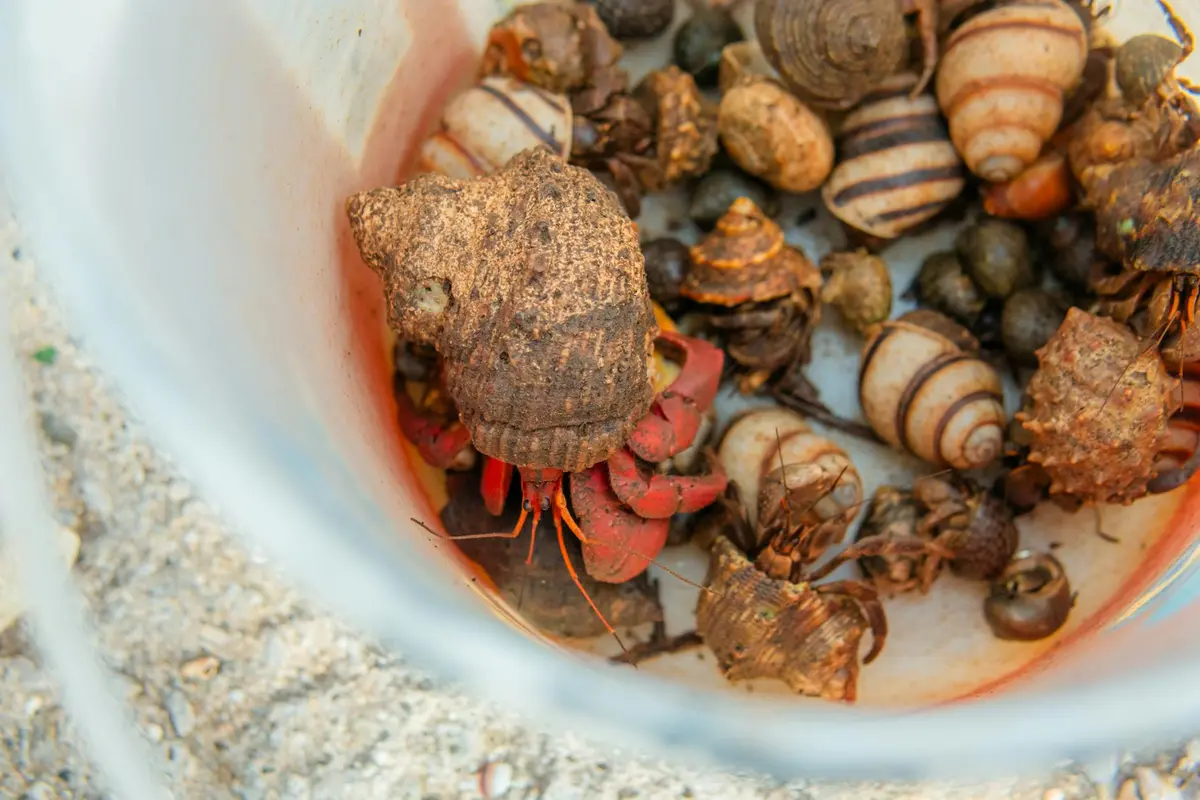
-
Start with choosing the right enclosure size and placement.
Your first decision is the tank itself. I learned the hard way that a 10-gallon tank is far too small for even two crabs. For my group of five, I use a spacious 55-gallon tank. This approach is in line with our complete sizing guide on the best tank size for hermit crabs. It walks you through sizing by crab count and space so you can choose the right enclosure for your setup. A good rule is 10 gallons per crab, but bigger is always better. Place the tank in a quiet area away from direct sunlight and drafts, as sudden temperature changes are very stressful for them.
-
Layer the substrate properly for burrowing and molting.
This is the foundation of your crab’s health. I use a mix of play sand and coconut fiber, moistened until it holds its shape when squeezed. The substrate needs to be at least 6 inches deep, or three times the height of your largest crab. This depth is non-negotiable-it allows them to safely bury themselves to destress and, most critically, to molt without being disturbed.
-
Set up heating and lighting to create a temperature gradient.
Crabs need warmth, but not an evenly heated tank. I place a reptile heat mat on the back wall of the tank, above the substrate line. This setup creates a warmer side (around 80°F) and a cooler side (around 75°F), letting your crabs choose their comfort zone. I don’t use bright, hot basking lamps, as they zap humidity. A low-wattage bulb on a timer can help simulate a day/night cycle.
-
Add humidity through misting and water dishes, including a saltwater pool.
Humidity is the lifeblood of a land crab’s gills. I keep a digital hygrometer in the tank and aim for 70-80% humidity. You will need two water pools: one for fresh dechlorinated water and one for dechlorinated saltwater, both deep enough for your largest crab to fully submerge. I use small plastic containers with craft mesh ramps for easy access. Daily misting with dechlorinated water helps maintain the moisture. Healthy moisture levels are essential for a healthy hermit crab, supporting shedding, respiration, and vitality. Providing both fresh and saltwater helps maintain their osmoregulation and overall wellbeing.
-
Arrange hides, shells, and climbing structures for enrichment.
This is where their personality shines. My crab Apollo loves to climb, so I provide cholla wood and grapevine branches. Offer at least 3-5 empty shells per crab, slightly larger than their current one, to prevent dangerous shell fights. Provide multiple hides, like half-coconut huts or caves, so every crab, from my assertive Zeus to my shy Athena, has a safe place to retreat.
Essential Supplies for Your Marine Hermit Crab Aquarium
-
The single most important item is a dedicated saltwater aquarium, not a simple tank with a bowl of saltwater. Marine crabs live fully submerged. You’ll need a protein skimmer to remove organic waste before it decays, and a substrate of live sand or fine aragonite sand. Live rock is not just decoration; it provides biological filtration and natural grazing surfaces for microfauna.
-
A powerful filtration system is mandatory. Canister filters or sump systems work well, but you must also create ample water movement with a powerhead or wavemaker. Stagnant water lacks oxygen and allows harmful bacteria to thrive. This constant flow mimics the ocean currents they are adapted to and keeps them healthy.
-
The care contrast with land setups is significant. While land crabs need a humid atmosphere, marine crabs require you to meticulously maintain stable salinity with a refractometer, not a hydrometer. I also add an iodine supplement to the water, which is critical for helping marine crabs successfully molt their exoskeletons, a process that is much more frequent and demanding in a full-time aquatic environment.
Step-by-Step Guide to Setting Up a Marine Hermit Crab Habitat
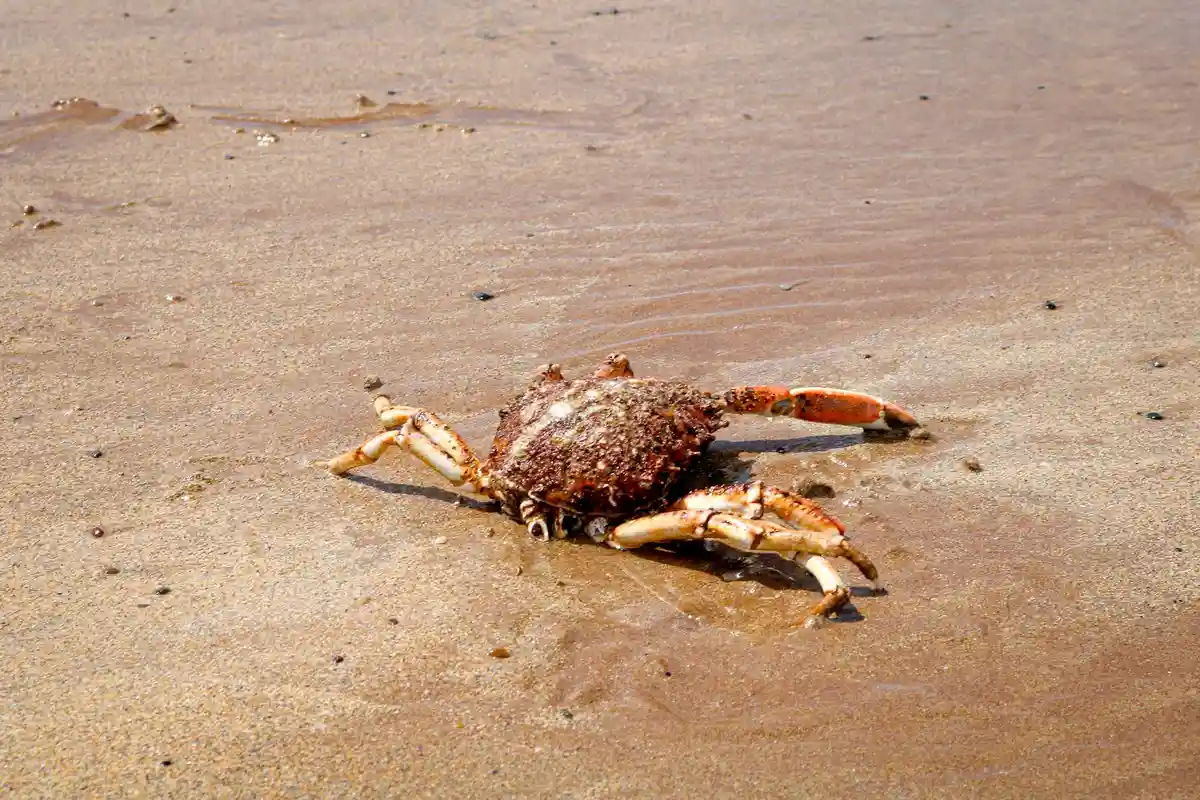
Creating a slice of the ocean in your home is a rewarding project, but it requires patience and precision. Rushing this process is the most common mistake and can be fatal for your new aquatic friends.
- Cycle the aquarium to establish beneficial bacteria before adding crabs. This is not a suggestion; it is the foundational step for a healthy tank. I set up my first marine habitat and waited a full six weeks, testing the water parameters almost daily, before I even considered it safe. This cycling process builds colonies of bacteria that naturally break down harmful waste like ammonia and nitrites.
- Install proper filtration and heating for stable seawater conditions. A powerful canister or hang-on-back filter is non-negotiable for keeping the water pristine. Pair this with a reliable submersible heater. Marine environments are incredibly stable in nature, and your tank must mimic that. Sudden temperature swings cause immense stress.
- Add substrate and aquascaping with live rock and coral-safe decor. I use a mix of aragonite sand and crushed coral for my substrate, which helps buffer the water’s pH. Then, I carefully arrange live rock-this is the biological powerhouse of the tank, providing surface area for beneficial bacteria and creating a natural landscape for exploration. Ensure all decorations are inert and safe for saltwater use.
- Maintain salinity and temperature consistently, using hydrometers. I keep my marine tank at a specific gravity of 1.023-1.025 and a steady temperature between 72-78°F. I use a digital refractometer for accuracy, as the cheap plastic hydrometers can be unreliable. Consistency is more critical than achieving a “perfect” number that constantly fluctuates.
- Provide ample empty shells and hiding spots to reduce aggression. In my experience, marine crabs can be even more particular about their shells than land crabs. I offer a wide variety of sizes and types of empty shells, ensuring there are always more options than crabs. Plenty of nooks in the live rock give shy crabs a place to retreat and feel secure.
Maintaining Optimal Habitat Conditions: Humidity, Temperature, and Ventilation
Whether you’re caring for land or marine crabs, stability is the golden rule. Their health is directly tied to the environment you create and maintain.
- Discuss creating humidity gradients and stable temperatures for both habitats. For my land crabs like Zeus and Apollo, I aim for a humidity level around 80%. I achieve this by using a deep substrate of sand and coconut fiber that I keep moist, along with a daily misting. The tank should have a slight humidity gradient, just like it has a slight temperature gradient from the heat source. My marine tank’s “humidity” is the air above the water, but the principle is the same-stable, consistent conditions prevent shell disease and respiratory issues.
- Offer tips on monitoring tools and daily checks based on my routine with Zeus and Poseidon. My morning routine involves a quick visual check of all my crabs. Then, I check the digital thermometers and hygrometers in each land tank. For Poseidon’s marine setup, I glance at the thermometer and filter output to ensure everything is running. I do a full parameter check-temperature, humidity, and for the marine tank, salinity-every single evening without fail. This habit has helped me catch small issues before they became emergencies.
- Address common issues like condensation in land tanks or algae in marine setups. If you see heavy condensation on your land crab tank lid, you likely need more ventilation. I cracked the lid slightly on Zeus’s tank to increase airflow and solve this. For algae in marine tanks, it’s a sign of either too much light or excess nutrients. I reduced my tank’s light cycle and ensured I wasn’t overfeeding, which cleared up the problem naturally. Controlling algae is part of the ecosystem balance.
Shell Selection and Exchange for Healthy Hermit Crabs

Think of a hermit crab’s shell as its mobile home, a piece of armor it carries everywhere. Providing a diverse shell shop is one of the most critical aspects of responsible hermit crab care. There is real science behind shell selection—crabs balance shell fit, size, and weight to optimize protection and mobility. I learned this quickly with Apollo, my Ecuadorian crab, who will meticulously inspect every new shell I offer before making a choice.
Offering the Right Shell Variety
Land and marine crabs have different needs, and their shell preferences reflect that. You can’t just offer any shell; the type, size, and opening shape matter immensely, especially when considering hermit crab shell selection.
- For Land Hermit Crabs (like Caribbean and Ecuadorian): They favor shells with round or D-shaped openings. Turbo shells, murex, and whelks are huge hits in my tank. My crab Hermes, for instance, adores lightweight turbo shells for his climbing escapades.
- For Marine Hermit Crabs: These crabs often choose heavier, more robust shells to help them stay anchored against water currents. Whelks and cerith shells are excellent choices for a saltwater environment.
- Sizing is Everything: Offer shells that are slightly larger than your crab’s current one. A good rule is to have 3-5 extra shells per crab in various sizes. Watch how your crab fits in its shell; if its big claw blocks the entrance, the shell is too small.
Encouraging a Successful Shell Swap
Crabs can be picky, and sometimes they need a little nudge to upgrade their home. I’ve found that strategic placement dramatically increases the chances of a shell exchange. For anyone helping a hermit crab change shells, this safe handling assistance guide helps keep stress low and the transition smooth. Here’s what works in my habitat:
- Place a few clean, desirable shells right in the food dish. Crabs are often more relaxed while eating and might try on a new shell then.
- Put a couple of shells near the freshwater and saltwater pools. My crab Poseidon changed shells right after a long soak.
- Ensure the shells are thoroughly cleaned and free of any chemical residues. Boil them in dechlorinated water and let them cool completely before adding them to the tank.
Supporting Shell Health with Calcium
A beautiful new shell is useless if your crab doesn’t have the dietary tools to maintain it. Calcium is the building block for a strong exoskeleton and is vital for a successful molt. Calcium is essential for hermit crab health and shell strength, supporting durable exoskeleton formation as they grow. Adequate calcium intake helps prevent soft, damaged shells between molts. I always keep multiple calcium sources available.
- Cuttlebone: This is a staple. You can find it in the bird aisle of any pet store. Just break off a piece and place it in the tank. All my crabs, especially Zeus, will gnaw on it regularly.
- Crushed Oyster Shell: I sometimes sprinkle this over their food or offer it in a small dish.
- Calcium-Rich Foods: Offer blanched spinach, kale, or a special hermit crab food mix fortified with calcium. This ensures they are getting this crucial nutrient from the inside out.
FAQs
How often should I change the water in my hermit crab’s habitat?
For land hermit crabs, replace the freshwater and saltwater in their pools daily to keep it clean and prevent bacterial buildup. In a marine hermit crab aquarium, perform a 10-25% water change weekly to maintain stable salinity and remove waste. Understanding the correct water change frequency and methods is essential for keeping hermit crabs healthy.
What is the best way to introduce new hermit crabs to an existing tank?
Always quarantine new hermit crabs in a separate enclosure for at least 30 days to check for health issues. After quarantine, acclimate them slowly by placing them in the main tank during a calm period and offer multiple hiding spots to minimize stress and aggression. In your first 30 days of hermit crab care, follow these step-by-step guidelines to ensure a smooth start. This quarantine-first approach is the first step in that 30-day care plan.
How can I tell if my hermit crab is about to molt?
Look for signs like reduced activity, frequent digging, and a dull or ashy appearance on their exoskeleton. They may also stop eating and bury themselves deeply in the substrate for an extended period to prepare for the molting process.
In Closing
Ultimately, creating the perfect home comes down to one fundamental rule: marine crabs need a fully aquatic, salty world to thrive, while land crabs require a humid, terrestrial space with access to both fresh and saltwater pools. By focusing on their specific needs for water, substrate, and climbing space, you are building more than just a tank-you are providing a foundation for a long, healthy, and fascinating life.
Further Reading & Sources
- Hermit Crab Habitat Setup
- r/hermitcrabs on Reddit: Hermit crab tank setup [updated]; any reccomendations? Tips and other advice to ensure a healthy long life for them?
- How to Build a Hermit Crab Habitat
The Crab Central is your ultimate resource for hermit crab enthusiasts, providing expert advice and practical tips to ensure the health and happiness of your shelled companions. With years of experience in crustacean care, we are dedicated to offering accurate, up-to-date information to support your hermit crab journey. Our mission is to foster a community of responsible hermit crab owners who are passionate about the well-being of these fascinating creatures.
Proper Tank Setup