Do Hermit Crabs Migrate? Movement Patterns Explained
Published on: July 10, 2026 | Last Updated: July 10, 2026
Written By: The Crab Guru
Watching my own crabs, Hermes and Apollo, trek tirelessly across their tank, I often wonder if this is a small echo of a much larger, wild journey.
With five crabs of my own, I’ve spent years observing their intricate movement patterns and researching the incredible migrations of their wild cousins.
Providing a large, enriching habitat is the single best way to support your crab’s natural movement instincts in captivity.
We’ll explore the epic ocean-to-land migration of wild hermit crabs and contrast it with the movement you see in your tank, explaining what drives their behavior and how to provide for it.
What Does Migration Mean for Hermit Crabs?
When we picture migration, we often think of birds flying south for the winter. For hermit crabs, it’s a different kind of journey. Hermit crab migration is a deliberate, population-wide movement from one habitat to another, driven by powerful biological imperatives. It’s not a casual stroll.
Distinguishing Migration from Daily Movement
In my tank, I see my crabs moving all the time. Hermes scurries from one side to the other, and Poseidon digs a new hole every night. This is daily movement. Daily movement is about immediate needs: finding a snack, escaping a bully, or locating a slightly more comfortable spot. Migration is a larger, more dangerous pilgrimage for the future of the species.
Think of it this way:
- Daily Movement: A short walk to your local grocery store. It’s routine and low-risk.
- Migration: A planned, cross-country road trip to start a new life. It’s complex and perilous.
My crab Zeus is assertive and guards his food spot, but even he isn’t trying to stop a migration. He’s just managing his daily turf.
Ontogenetic Shifts and Shell Acquisition
This is a fancy term for a simple, beautiful process: growing up. As juvenile hermit crabs get bigger, they must leave their nursery grounds and migrate to areas where larger shells and different food sources are available. An ontogenetic shift is a mass migration of teenagers moving out of their childhood home and into the adult world.
Shell acquisition is the engine of this journey. I see this with Apollo, who is constantly trying on new shells. In the wild, this need forces crabs to travel to rocky shores or specific beaches known for a good supply of empty gastropod shells. Their entire life path is a migration toward the next perfect shell.
Movement Triggers in Wild Coastal Habitats
Wild hermit crabs don’t just decide to move on a whim. Their environment gives them very clear signals. Having monitored my own crabs for years, I recognize the same deep-seated instincts playing out in their captive behaviors. To properly handle your hermit crab, learn its behavior and stress signals so you can adjust care accordingly. Recognizing these cues helps you respond calmly and prevent unnecessary stress for the crab.
Seasonal and Nocturnal Activity Patterns
If you’ve ever noticed your crabs are most active at night, you’ve seen this firsthand. Nocturnal activity is a survival strategy to avoid the heat of the day and land-dwelling predators. This is when the majority of their migratory movements occur. Are hermit crabs truly nocturnal, or do they adjust their activity to day–night cycles? Understanding their sleep patterns and activity cycles can help explain when they’re resting and when they’re most active.
Seasonal changes, particularly the rainy season, are a massive trigger. Increased humidity and softer ground make long-distance travel across land safer and less dehydrating. My crab Athena is calm, but even she becomes more active when I raise the tank’s humidity, tapping into that ancient instinct to move when conditions are right.
The Role of Food and Breeding Cycles
Food availability and reproduction are the ultimate reasons for large-scale migrations. A population might migrate inland to feast on fallen fruits or to coastal zones for specific marine nutrients. Breeding migrations are the most dramatic, with thousands of crabs moving synchronously toward the ocean to release their eggs.
This is a vulnerable and sacred time. The crabs are driven by a single purpose. In captivity, we don’t see this epic scale, but we see the shadows of the behavior. You might notice increased activity and digging around the time these events would occur in their native habitats. It’s a reminder of the powerful, wild rhythms that still pulse beneath those shells.
Behavior and Locomotion in Captive Environments
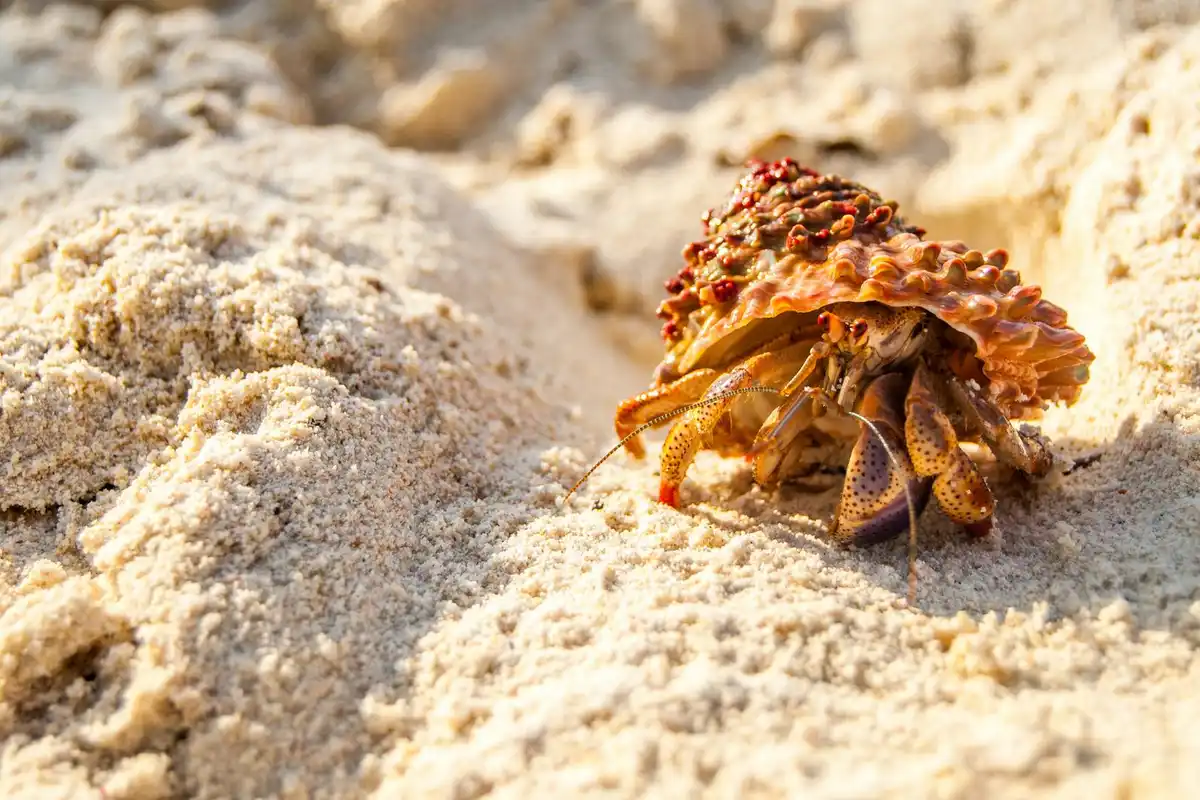
Watching my own crabs, like Hermes and Apollo, I see their movement isn’t random. Their daily travels are a direct response to the world you build for them inside their tank. They don’t migrate vast distances, but they are constantly patrolling, exploring, and searching for resources.
Shell Selection and Territoriality in Tanks
In the wild, finding a new shell is a matter of life and death. In your tank, it’s a major social event. I’ve seen my assertive crab, Zeus, guard a pile of empty shells he has no intention of using, just to assert dominance.
- Shell Vacancies Spark Activity: When one crab changes shells, it creates a chain reaction. The discarded shell becomes a hot commodity, leading to a flurry of inspections and swaps among the other crabs.
- Provide a Shell Shop: I keep a variety of sizes and types (round vs. D-shaped openings) scattered around the tank. This prevents resource guarding and gives every crab, from calm Athena to fast-moving Hermes, a fair choice.
- Respect the “Try-On” Process: A crab investigating a new shell will spend a long time feeling it and may even line up several options. This is normal behavior, not indecisiveness.
Enclosure Design and Its Impact on Movement
A boring tank makes for a sedentary crab. My crab Poseidon, for example, would barely move until I redesigned his space to include a deep, moist digging area.
- Create Multiple Activity Zones: Designate separate areas for feeding, hiding, climbing, and water. This encourages natural foraging behavior as they travel between them.
- Vertical Space is Crucial: Hermit crabs are climbers. Adding cholla wood, reptile hammocks, and safe climbing structures gives them a third dimension to explore, mimicking their natural inclination to climb roots and rocks.
- Substrate Depth Dictates Security: A shallow substrate discourages natural molting behavior, which is their most vulnerable and sedentary period. A deep, packable substrate allows for safe burrowing and is the single most important factor for healthy molting.
Key Factors Influencing Hermit Crab Movement Patterns
Crabs move for specific, instinctual reasons. Understanding these triggers helps you see their behavior not as random wandering, but as a complex language of needs. Especially for hermit crabs, which often communicate through subtle movements.
Molting and Shell Switching Behaviors
Molting is the ultimate reason a crab will suddenly stop moving. Before molting, they become lethargic, dig down, and disappear for weeks. Afterward, they are incredibly active as they search for a new, larger shell to protect their soft, new exoskeleton.
- Pre-Molt Lethargy: Your crab may stop eating and moving to conserve energy for the arduous molting process.
- The Great Disappearance: They burrow deep into the substrate to find a safe, dark, and humid place to molt. Do not dig for them.
- Post-Molt Urgency: Once their new exoskeleton hardens, they will emerge ravenous and desperately seeking a new shell. This is when you’ll see the most frantic movement.
Social Dynamics and Dispersal
Hermit crabs are not truly solitary. They have a complex social structure that directly influences where and how they move within their territory. In a tank with multiple crabs, these dynamics influence who claims shells and where they roam. Properly managing these interactions helps prevent fights and ensures fair access to resources. For more information, check out the article on hermit crab social dynamics.
- Hierarchy and Displacement: A dominant crab, like my Zeus, will often claim the prime real estate under the heat lamp or near the food dish. This forces subordinate crabs to move around him or visit these areas only when he is elsewhere.
- Communal Molting Pits: In the wild, crabs often molt in groups for safety. In captivity, you might find several crabs have buried themselves in the same general area of the tank, a behavior rooted in this social instinct.
- Following the Crowd: Crabs will often investigate what another crab is doing. If one is intently digging or inspecting a shell, others will frequently come over to see if there’s something they should know about.
How to Support Healthy Movement in Your Crabitat
In my years of caring for my crew, I’ve learned that a stagnant crab is often an unhappy or unhealthy crab. Promoting natural movement is one of the most direct ways we can support their physical and mental well-being in our homes. It mimics the constant search for food, shelter, and ideal conditions they would experience in the wild.
Observing and Interpreting Nocturnal Activity
If you only check on your crabs during the day, you’re missing the main event. Hermit crabs are primarily nocturnal, and their most fascinating behaviors happen after dark. I’ve spent many evenings with a dim red light observing my tank. To catch this in action, set up a night cycle with a dim red light on a regular timer. This makes their natural nocturnal activity easier to study and keeps stress low.
- Nightly Patrols: It’s completely normal to see your crabs walking the perimeter of the tank, climbing decorations, or simply shifting positions. Hermes, my Caribbean crab, does a full “security check” of the tank almost every night.
- Cluster Movement: Don’t be alarmed if you see crabs gathering in one spot. This is often a social behavior or a search for higher humidity. If they are all trying to climb the glass in one corner, it’s a sign your tank’s overall humidity might need adjusting.
- The Shell Inspection Line: One of my favorite things to witness is the “shell shop.” Crabs will line up and meticulously inspect each other’s shells. This is a peaceful, non-aggressive process where they are waiting for a new, perfectly-sized home to become available.
- Track Their Travels: I sometimes sprinkle a tiny, harmless amount of coconut fiber substrate near their main hideout. In the morning, seeing their tiny tracks leading to the food dish, water pools, and climbing gym tells me they had a busy, enriching night.
Enrichment Ideas for Encouraging Natural Locomotion
A boring tank leads to lazy crabs. I regularly rotate and add new items to keep my crabs curious and active. The goal is to create a miniature landscape that offers choices and challenges, not just a flat box to live in.
- Create a Vertical World: Use cholla wood, reptile vines, and cork bark to build climbing structures. My crab Apollo will spend hours navigating a complex web of branches I set up.
- Substrate Variety: Offer a deep area of moist sand and eco-earth for digging and molting, and a shallower, drier area with flat stones. Poseidon loves having a dedicated “digging pit.”
- Foraging Fun: Instead of placing all food in one bowl, hide small, safe treats like pieces of dried shrimp or coconut flakes around the tank. This encourages them to use their senses and explore.
- Safe Shell Swaps: Always keep a variety of clean, appropriately-sized empty shells in the tank. This encourages natural shell shopping behavior and prevents fights.
- Rearrange the Furniture: Every few months, I completely redesign my crabitat. The crabs will spend the next week meticulously exploring every new nook and cranny, which provides immense mental stimulation.
Conservation Insights from Wild Hermit Crab Ecology
Understanding what hermit crabs do in the wild isn’t just trivia-it’s the foundation of good captive care. Their survival instincts are hardwired, and by respecting these instincts, we become better caretakers. This includes understanding their natural behavior for burrowing and hiding.
How Wild Behavior Informs Captivity Care
The mass migrations of wild hermit crabs are a dramatic response to survival needs. While our pets won’t undertake epic journeys, their fundamental need to move for resources remains the same. We must provide those resources within their enclosure to prevent stress. In a well-managed colony, providing ample shells, space, and equal access to resources helps prevent fights and reduce stress. Thoughtful colony management is key to keeping hermit crabs calm and social.
- Water is Life: In the wild, crabs move from inland areas to the sea to reproduce and regulate salinity. In your tank, this translates to providing both fresh and saltwater pools that are deep enough for them to submerge in. This is non-negotiable for their health.
- The Shell Crisis: Wild hermit crabs face a severe shortage of natural shells, often forcing them to use plastic trash. In captivity, we have a responsibility to provide an abundance of proper natural shells. This directly prevents competition and injury.
- Molting is a Migration In Place: A crab digging down to molt is its own form of migration-it’s moving to a safe, secluded space to perform a vulnerable, life-changing process. We must provide a deep, stable substrate so they can do this safely without being disturbed by tank mates.
- Space to Roam: A cramped tank is like a concrete wall to a wild crab’s instinct to roam. Providing the largest tank possible directly supports their natural urge to travel and explore, leading to more active, engaged pets.
FAQs
Can hermit crabs in captivity migrate like wild ones?
No, captive hermit crabs cannot undertake true migrations due to the confined space of their enclosure, which prevents large-scale, population-wide movements. However, they still exhibit instinctual behaviors like exploring and patrolling their tank, which mimic aspects of their wild movement patterns.
What does it mean if my hermit crab is inactive for long periods?
Prolonged inactivity often signals that your hermit crab is preparing to molt, a process where they burrow into the substrate to shed their exoskeleton safely. It could also indicate stress from improper environmental conditions, such as incorrect humidity or temperature, requiring a check of your tank setup.
How can I tell if my hermit crab’s movement is normal or a sign of distress?
Normal movement includes nightly exploration, climbing, and shell investigations, which show healthy curiosity and social behavior. Signs of distress include frantic glass-climbing, constant hiding without activity, or aggressive chasing, which may point to issues like poor habitat conditions or overcrowding.
In Closing
While hermit crabs do not migrate in the traditional sense, their lives are defined by a constant, purposeful search for resources like food, water, and the perfect shell. In captivity, we become the providers of these essentials, and their movement is a direct reflection of the habitat we build for them. By observing their patterns and ensuring their home is rich with opportunities, we support their natural instincts for a healthy, active life. Habitat can directly influence lifespan. A well-maintained habitat supports longer, healthier lives by reducing stress and aiding molts.
Further Reading & Sources
- The Great Hermit Crab Migration | Smithsonian Ocean
- Structure of seasonal migrations of the littoral hermit crab Clibanarius vittatus (Bosc) – ScienceDirect
- Movement patterns and dispersal of the hermit crab Clibanarius longitarsus in a mangrove swamp: Marine Behaviour and Physiology: Vol 16, No 4
The Crab Central is your ultimate resource for hermit crab enthusiasts, providing expert advice and practical tips to ensure the health and happiness of your shelled companions. With years of experience in crustacean care, we are dedicated to offering accurate, up-to-date information to support your hermit crab journey. Our mission is to foster a community of responsible hermit crab owners who are passionate about the well-being of these fascinating creatures.
Understanding Hermit Crab Behavior